
Last updated September 20, 2026
Full 25-point door and opener safety check with every visit - springs, cables, rollers, tracks, and your LiftMaster or Chamberlain opener included
You get a price before we start. It does not change when the truck arrives.
 Before
 After
After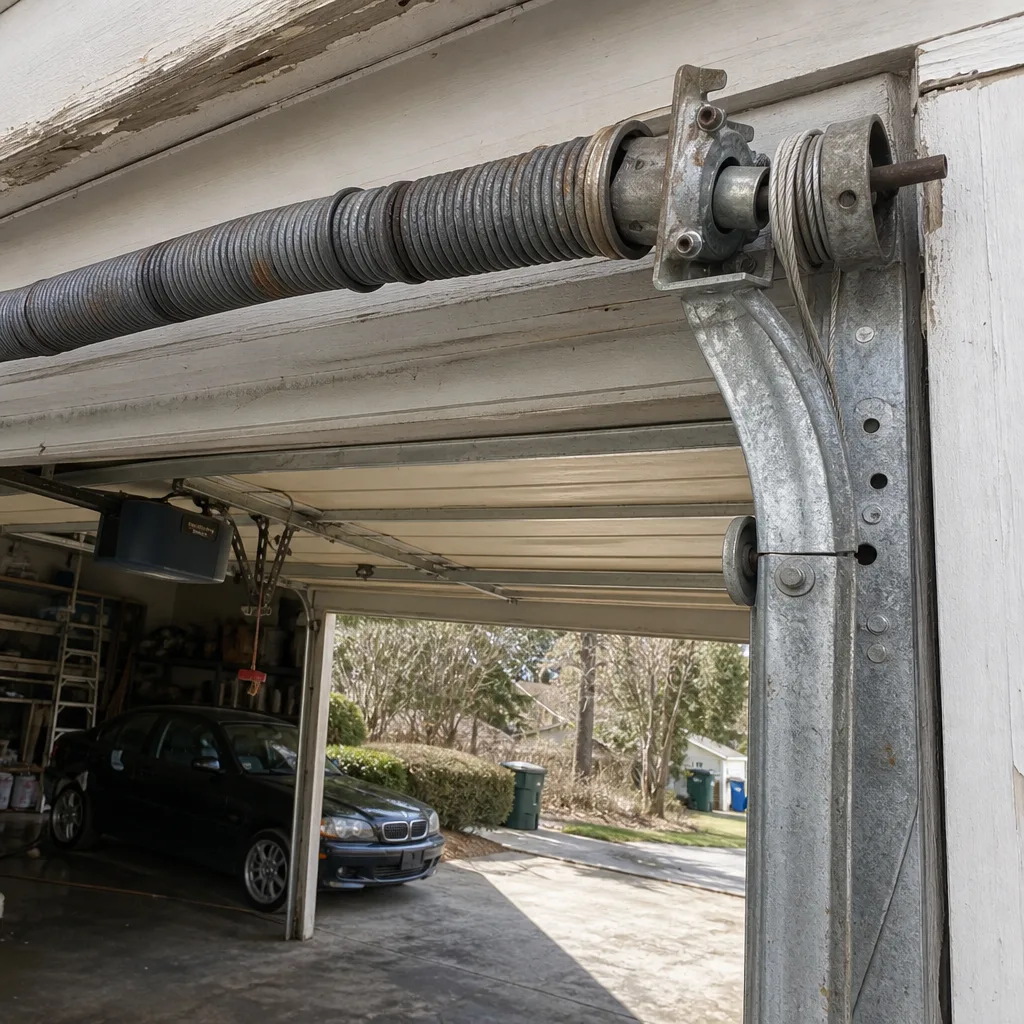 Before
 After
After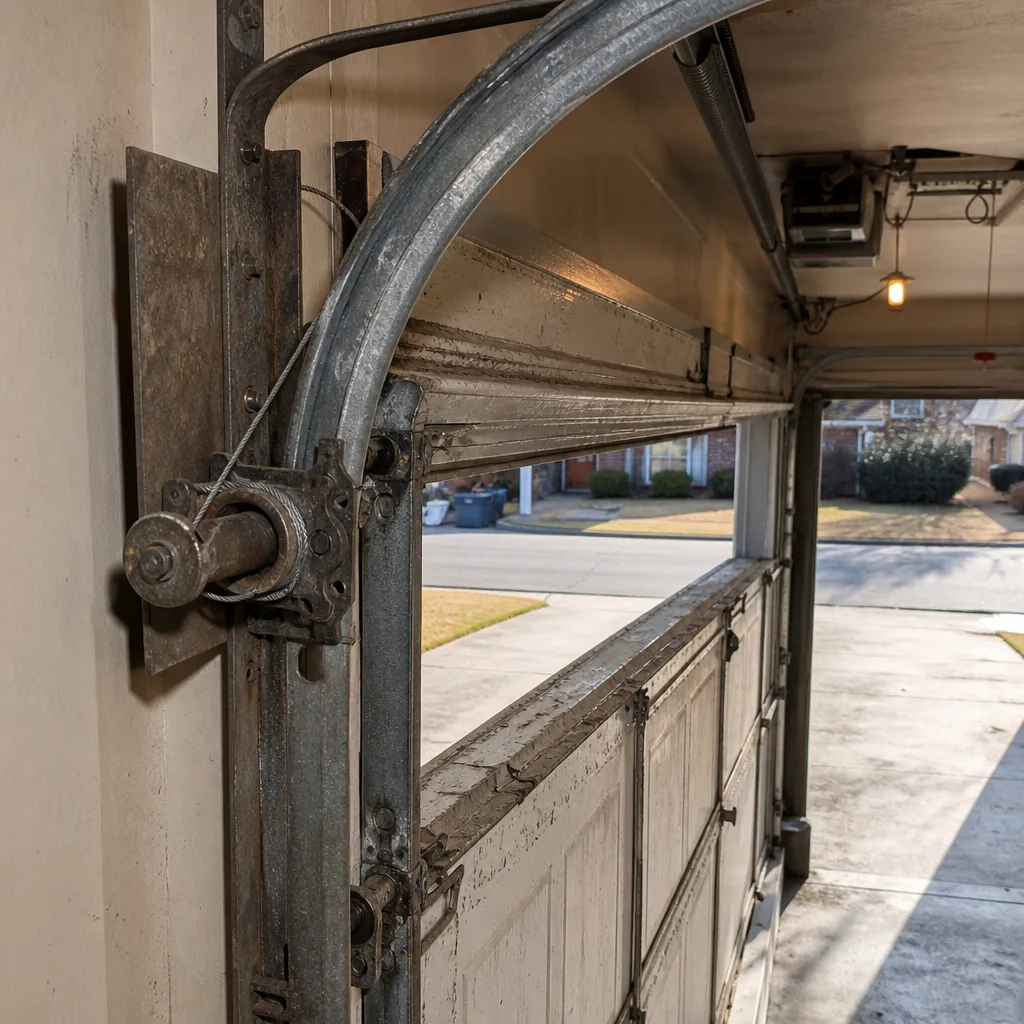 Before
 After
AfterGarage Door Warning Signs: A Cumming Homeowner’s Reference Guide
A garage door that hesitates for two seconds before moving is not “just getting old.” That pause is the opener motor working against a resistance problem, most often a friction fault in the rollers or a spring that’s lost tension, and it’s measurable in the watt-hours the motor is burning that it wasn’t six months ago. This Complete Guide to Garage Door in Cumming is written for homeowners who want to understand what their garage door is telling them before a $90 repair becomes a $700 emergency call. You’ll learn to map specific symptoms to specific components, assign an urgency tier to what you find, and know exactly when to pick up the phone.
Quick Answer
Most serious garage door failures announce themselves days or weeks in advance through recognizable symptoms: a grinding sound means worn rollers, a loud bang from the center of the door usually means a broken torsion spring, and a door that drifts downward after opening points to a cable tension imbalance. In Cumming, where summer humidity accelerates roller wear and winter temperature swings stress springs, homeowners should check for these signs monthly and treat any symptom involving springs or cables as a stop-using-the-door-now situation; for a full maintenance schedule, see our Seasonal Garage Door Care for Cumming: Year-Round Homeowner’s Guide.
Table of Contents
- The Symptom-to-Component Index
- Three Urgency Tiers: What to Do and When
- The Asymmetric Movement Test
- Using Opener Behavior as a Diagnostic Tool
- Documentation Protocol: Photographing Symptoms Before You Call
- Why Cumming’s Climate Accelerates Wear
- Common Mistakes to Avoid
- When to Call a Professional
 Before
 After
AfterThe Symptom-to-Component Index
Every sound and behavior your garage door produces can be traced to a specific part. Here’s the mapping we use on service calls across Garage Door Repair in Cumming, and it’s the same reference you can use at home. The index runs from most to least severe.
Loud bang from the center of the door
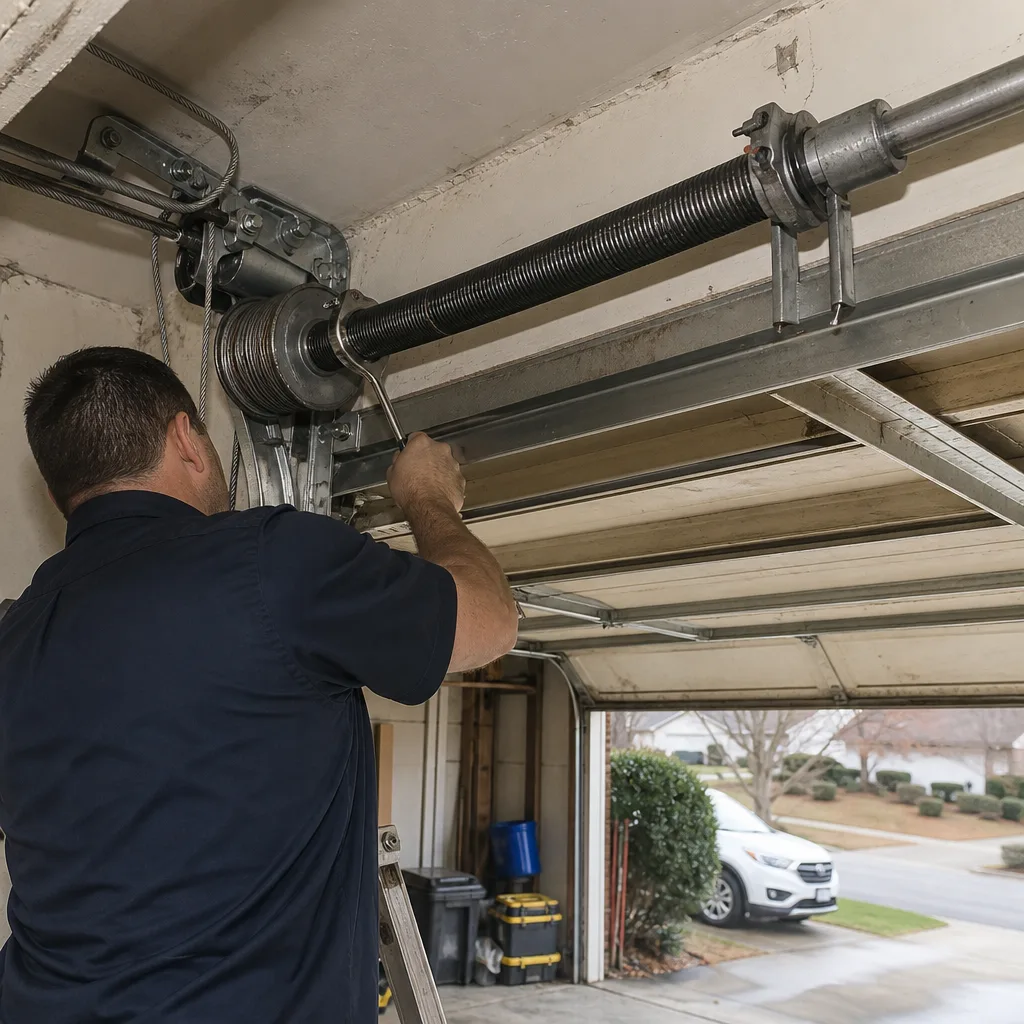
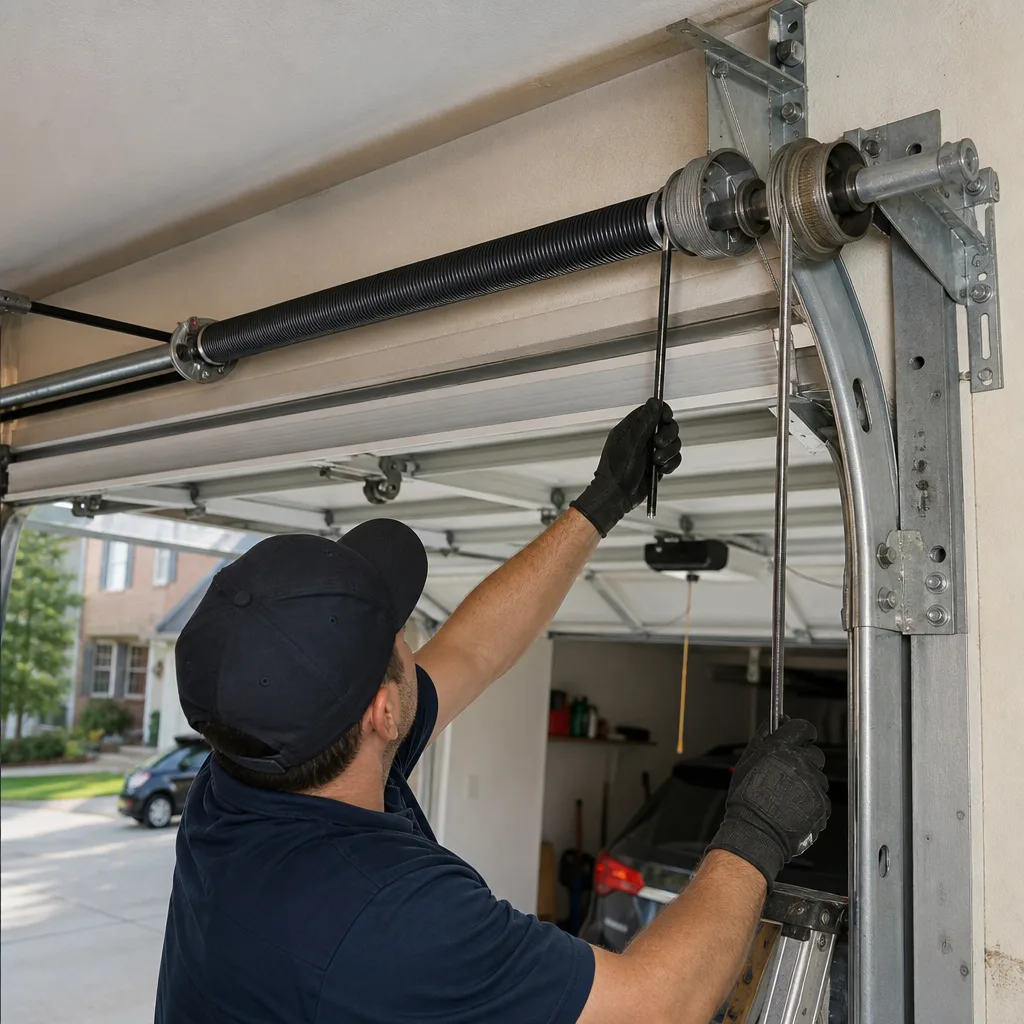
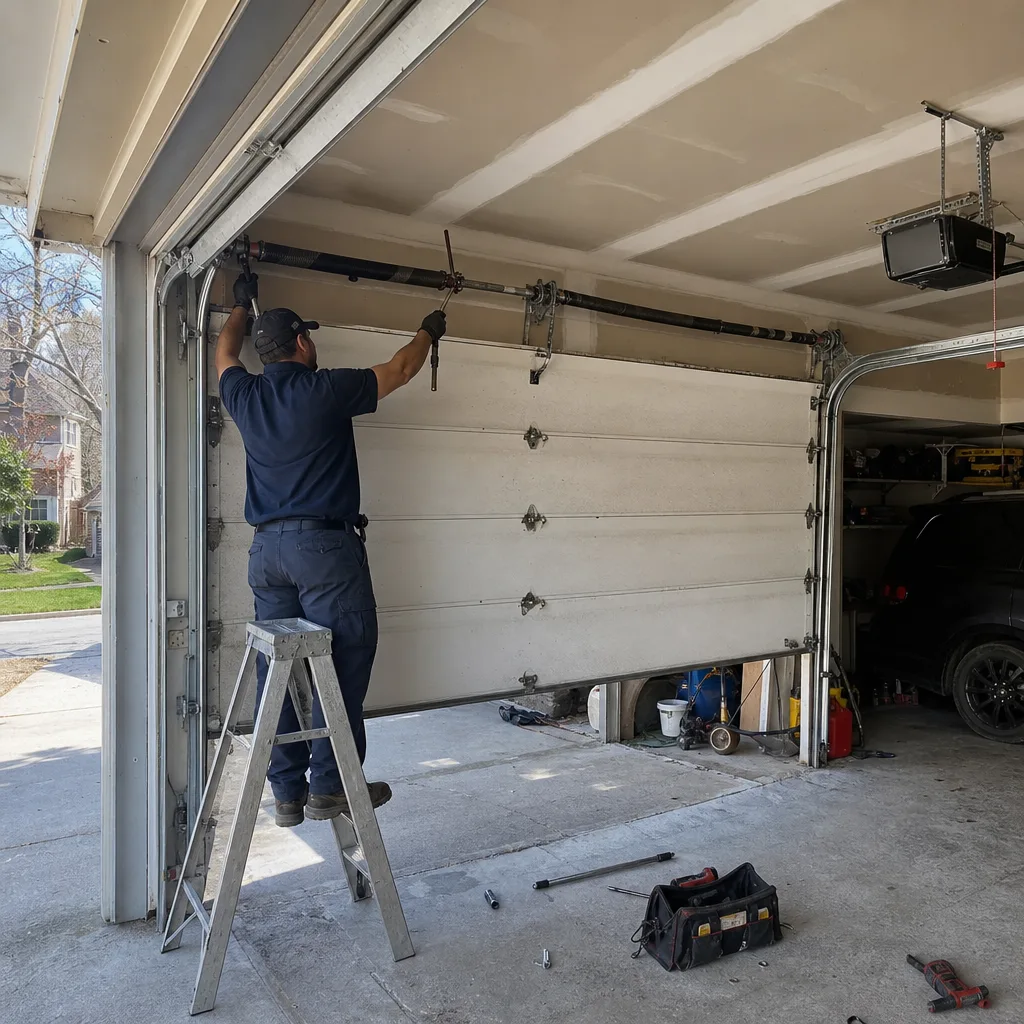
Component: Torsion spring. A torsion spring is the coiled steel spring mounted horizontally above the center of the door opening. It stores the energy that lifts the door. When it snaps, the sound is a sharp crack or bang, often described by homeowners as sounding like a gunshot or a car backfiring. The door will not open manually or with the opener afterward, or it will open only a few inches. This is a stop-using-the-door-now situation. The spring is under tension and a broken one leaves the door’s full weight unbalanced, which can send a manual lift attempt through the ceiling or into a person.
Grinding or metal-on-metal scraping
Component: Rollers or hinges. Rollers are the small wheels that ride inside the vertical and horizontal tracks on both sides of the door. When the bearings inside a roller wear out, the wheel stops rolling and starts sliding, producing a grinding sound and leaving flat spots on the roller. Hinges that have lost lubrication produce a higher-pitched scrape. In Cumming, where spring pollen coats everything and summer humidity accelerates corrosion, we replace a lot of steel rollers that have seized at the bearing. Nylon rollers with sealed bearings last longer in this climate.
Door drifts down after opening, or slams on the way down
Component: Cable or spring tension imbalance. The lift cables are the two steel cables running along each side of the door, attached to the bottom brackets. They work with the springs to distribute the door’s weight evenly. When one cable has stretched or a spring has lost tension on one side, the door “settles” to one side and drifts when the opener releases it. A door that slams down rather than lowering smoothly has lost its counterbalance, usually from a spring that’s fatigued but not yet broken.
Squealing or high-pitched whine during operation
Component: Opener belt, chain, or trolley carriage. The trolley carriage is the part connected to the rail that physically pulls the door open and pushes it closed. A belt-drive opener producing a squeal usually means the belt tension is off or the carriage wheel bearings are dry. A chain-drive opener that whines typically has a chain with too much slack. These are annoyance-level sounds but they indicate the opener is working harder than it should.
Opener runs but the door doesn’t move
Component: Broken spring, stripped gear, or disconnected carriage. If the motor hums and the carriage moves along the rail but the door stays put, the carriage release cord has been pulled or a spring has broken and the opener can’t lift the dead weight. If the motor whirs but nothing moves at all, the gear inside the opener housing has stripped. Both are common on openers six years or older in Cumming, where the temperature swings between December and August stress plastic gear teeth.
Three Urgency Tiers: What to Do and When
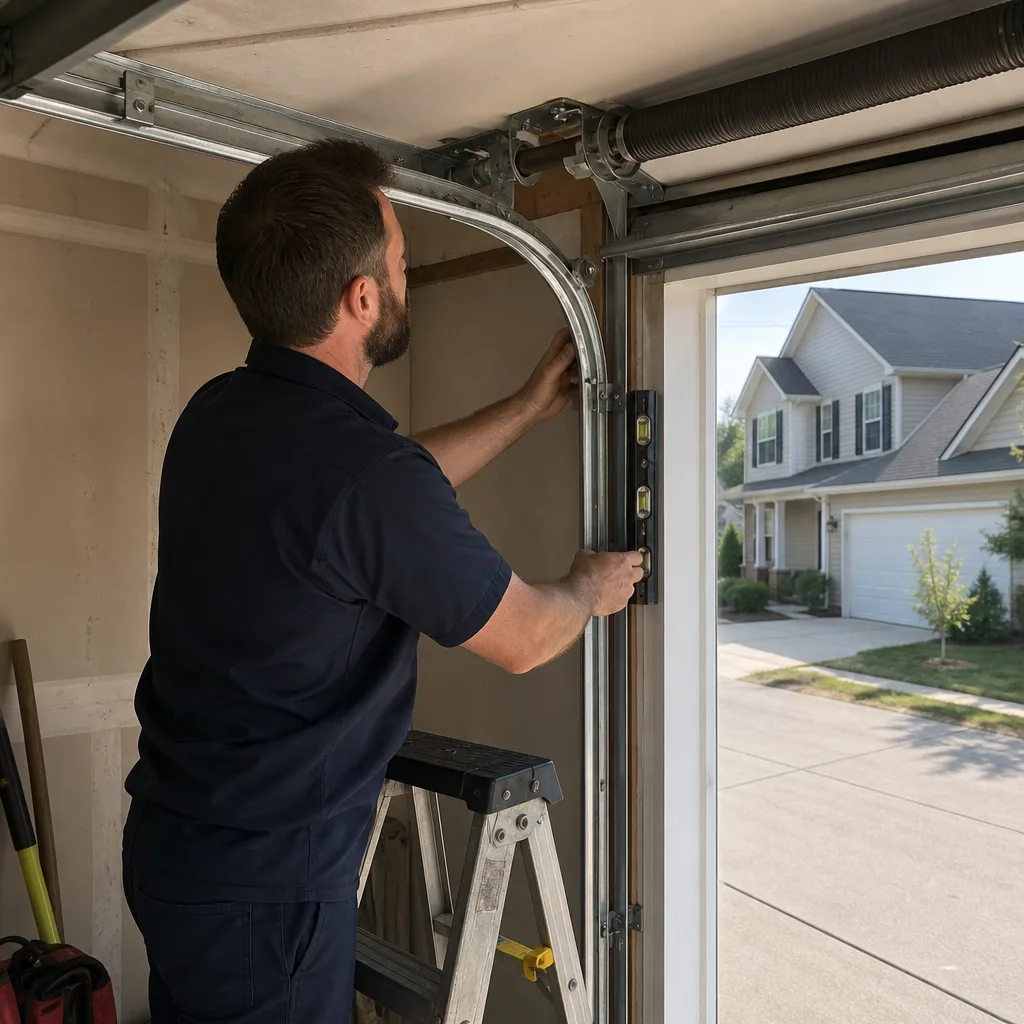
Not every symptom deserves a same-day call. But some do. Here’s the tiered response system we recommend to Cumming homeowners, based on the mechanical reality of what’s failing and what it costs if you wait; for help choosing a professional, read our How to Hire a Garage Door Contractor in Cumming: A Step-by-Step Guide.
Tier 1: Stop using the door immediately
- Broken torsion spring (identified by the loud bang and an immovable door). The door’s full weight, typically 150 to 250 pounds for a double door, is now unassisted. Forcing it open risks injury and damage to the cables, tracks, and opener.
- Frayed or visibly damaged lift cable. The lift cable is a steel cable under constant tension. When strands start separating, the cable is near failure. If it snaps while the door is moving, the door drops uncontrolled.
- Door off track. If a roller has jumped out of the track, the door can bind or fall. A door sitting visibly crooked in the opening is not safe to operate.
For any Tier 1 condition in Cumming, call us. We answer the phone with a live person 24 hours a day, including holidays, and a named technician is dispatched with an on-the-way text. The price is written and agreed before any work starts, per Clause 1 of The Haven Standard.
Tier 2: Schedule within two weeks
- Grinding rollers. Worn rollers won’t cause a catastrophic failure tomorrow, but they’re increasing friction on every cycle, which shortens spring life and strains the opener.
- Visible track misalignment. If you can see a gap between the track and the door edge, or if the door wobbles side to side while moving, the track brackets have shifted. Left alone, the door will eventually bind or jump the track.
- Door drifting after opening. A door that drops a few inches after reaching the open position has a spring losing tension. It’s not dangerous yet, but the spring is in progressive failure.
Tier 3: Address at next tune-up
- Bottom seal wear. The rubber strip along the bottom of the door keeps water, leaves, and insects out. In Cumming’s rainy spring, a cracked seal lets water pool on the garage floor and invites pests.
- Minor grinding from hinges. A quick shot of white lithium grease on the hinge pivots often resolves it. If the sound persists after lubrication, the hinge is worn and should be replaced at the next service.
- Cosmetic rust on hardware. Surface rust on brackets and hinge plates is common in Georgia humidity. It’s a maintenance item, not a failure.
The Asymmetric Movement Test
One of the most useful diagnostic exercises a Cumming homeowner can perform takes about 60 seconds and requires no tools. It identifies whether one side of the door is carrying more load than the other, which is the precondition for cable failure and track damage.
Here’s how it works:
- Stand inside the garage, facing the closed door from about 10 feet back.
- Have someone operate the opener, or use the wall button while you watch.
- Watch the bottom corners of the door as it rises. Both corners should leave the floor and move upward at precisely the same moment.
- Watch the gap between the door edge and the vertical track on each side. The gap should remain consistent from bottom to top of travel.
- At the fully open position, look at the horizontal tracks above your head. The door should sit level, with each side resting at the same spot on the track.
What you’re looking for is any difference between left and right. A door that rises faster on one side, sits at a slight angle in the open position, or shows a wider gap between door and track on one side has a load imbalance. The usual cause is uneven spring tension, a stretched cable, or a track bracket that has pulled away from the wall. The reason this matters before it becomes an emergency is that a load imbalance concentrates stress on one cable. Cables don’t announce themselves before they fail the way springs do. One moment the door is operating, the next the cable lets go and the door drops on that side. We’ve seen the aftermath in homes throughout Cumming’s subdivisions, and the repair bill after a cable failure is always higher than the fix for the imbalance that preceded it.
Using Opener Behavior as a Diagnostic Tool
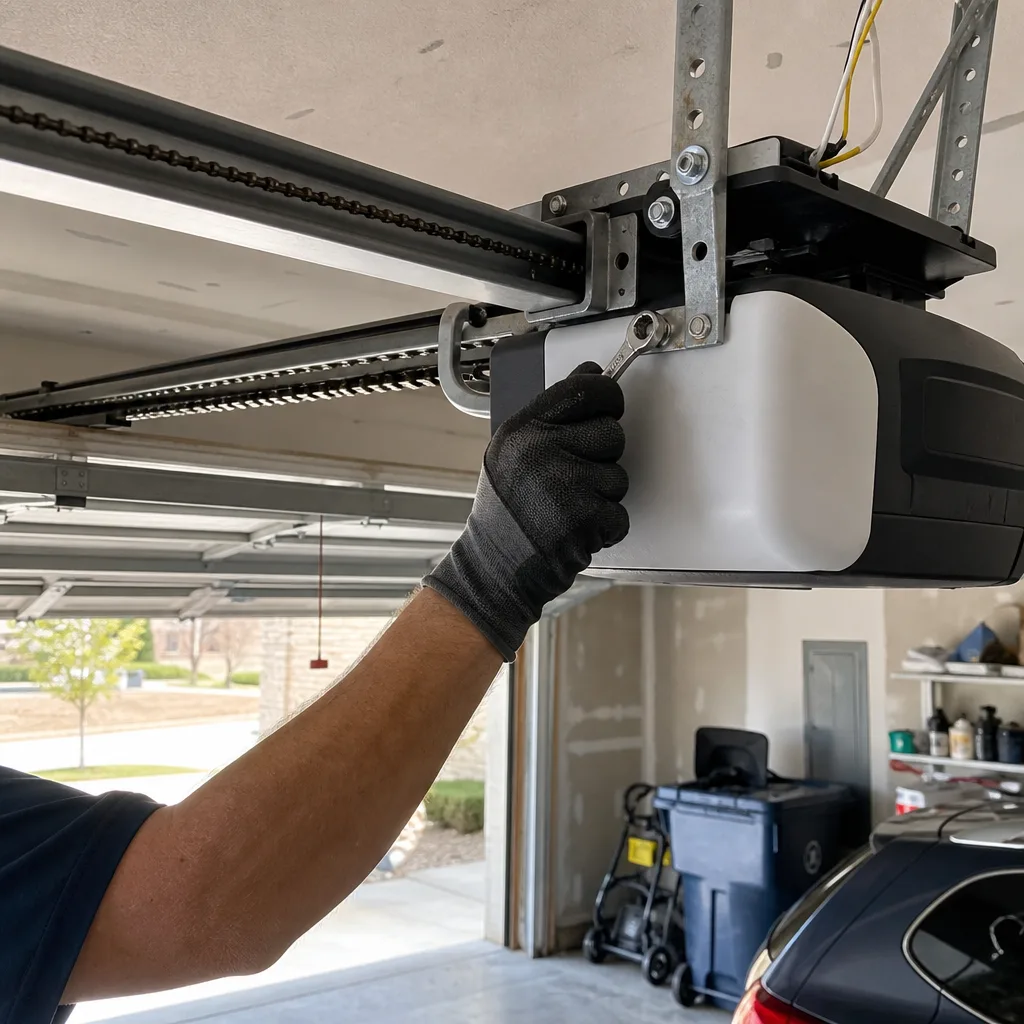
Your garage door opener has its own set of diagnostics, and reading them correctly can tell you whether the problem is in the opener itself or in the door it’s attached to. Most openers made in the last 15 years, including models from LiftMaster, Chamberlain, and Genie, have logic boards that monitor motor current and respond to resistance by reversing or stopping.
The opener reverses immediately after touching the floor
This is the opener’s force-limit circuit activating. The motor senses resistance above a programmed threshold and reverses direction to protect against crushing an object or person. If no obstruction is present, the usual causes are a door that’s gotten heavier (spring fatigue), rollers that have seized and increased friction, or a force limit that was set too low. The opener is not broken. It’s telling you the door is harder to move than it used to be.
The opener runs but the door does not move
If the motor hums and the carriage, the part on the rail that pulls the door, moves but the door stays put, the emergency release cord has likely been pulled and the carriage is disconnected. Reconnect it by pulling the cord toward the door until it clicks. If the carriage doesn’t move but the motor runs, the gear inside the opener has stripped, which is common on openers six to ten years old. This is an opener replacement situation, not a door repair.
The opener clicks but nothing happens
A single click from the opener when you press the wall button, with no motor run, usually indicates a failed logic board or a bad start capacitor. The logic board is the circuit board inside the opener housing that controls the motor’s operation. These fail more often in Cumming than in drier climates because humidity accelerates corrosion on the board’s solder joints. If the door operates manually, the opener is the problem. Garage Door Opener Repair & Installation in Cumming is its own service category for a reason, and we stock replacement boards for most major brands on our trucks.
Documentation Protocol: Photographing Symptoms Before You Call
Before you pick up the phone, take three photographs. This practice, which we recommend to every Cumming homeowner, creates an independent record of the door’s condition before any technician arrives. It’s the same standard we hold ourselves to internally. Clause 4 of The Haven Standard is why our technicians photograph the failed component before quoting a replacement. You deserve the same evidence on your side of the transaction.
Here’s what to photograph:
- The symptom itself. A frayed cable, a broken spring end, a roller that’s flat-spotted or off track. Get close enough that the damage is visible in the photo.
- The door in its resting position. Stand back and photograph the full door from inside the garage. This captures alignment issues, visible gaps, and the overall condition of tracks and hardware.
- The opener unit. A clear photo of the opener’s make and model label. This tells any technician exactly what they’re working with before they dispatch, and it confirms what you have if a replacement quote is issued.
These photos serve a specific purpose. If a technician quotes a spring replacement, you have a photo proving the spring was broken before service. If a different company gives you a written estimate for track work, your photos are evidence of what was and wasn’t damaged before they arrived. This is the paper-trail approach the whole industry should use, and the one we’ve used on every job since 2015, now roughly 18,000 garage doors made right across Cumming and north Fulton.
Why Cumming’s Climate Accelerates Wear
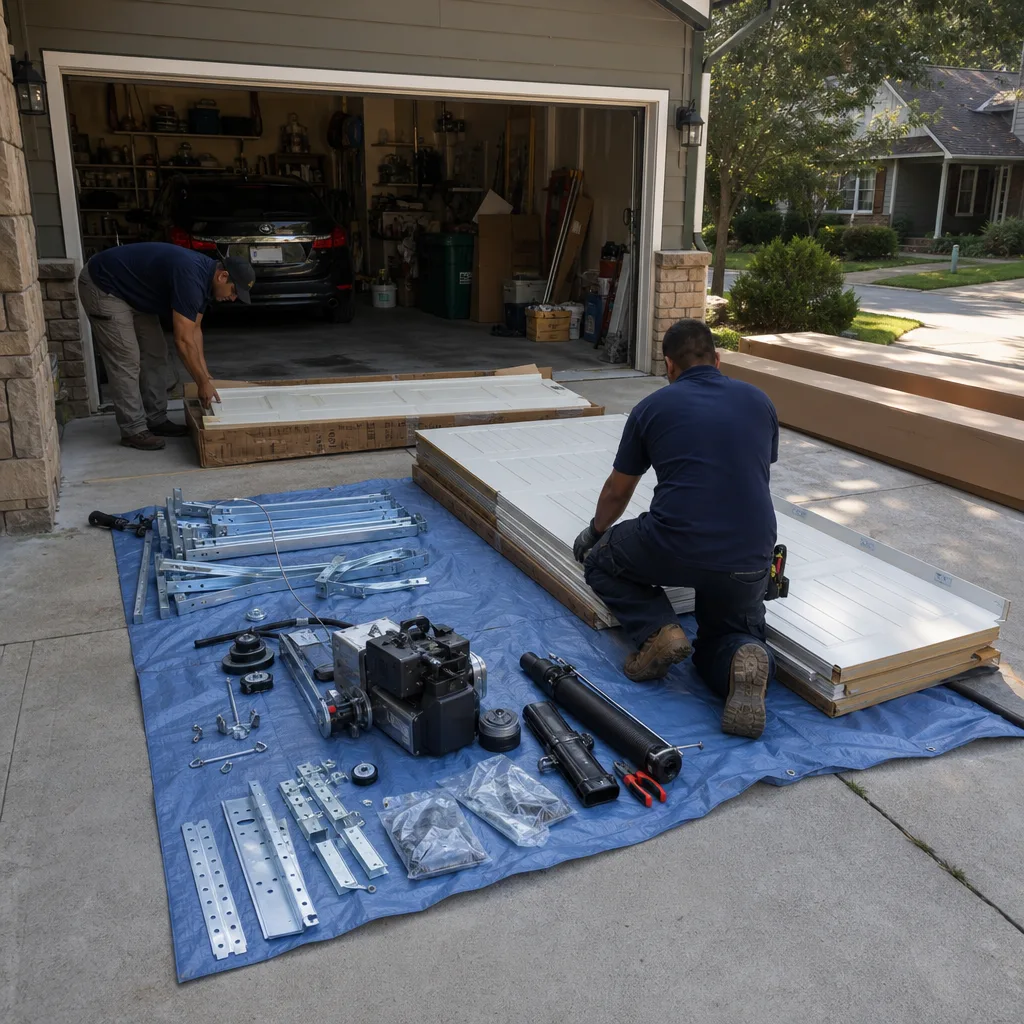
Cumming sits at an elevation that gives us colder winter mornings than Atlanta and summer humidity that matches the rest of north Georgia. Both extremes matter for your garage door in measurable ways.
Springs and temperature. Torsion springs are rated for a specific cycle count, typically 10,000 cycles for a standard spring, but cold temperatures increase the metal’s brittleness and make fatigue fractures more likely. A spring that’s cycled 8,000 times in Phoenix behaves differently than one that’s cycled 8,000 times in Cumming, where January mornings in the low 20s are common. We replace more springs between December and February than any other quarter.
Rollers and humidity. Steel rollers with unsealed bearings collect humidity, which leads to corrosion and eventually seizure. A seized roller stops turning and starts sliding, which flat-spots the wheel and creates the grinding sound we described earlier. Nylon rollers with sealed bearings eliminate this failure mode, and in Cumming’s climate, they’re worth the upgrade cost on nearly every door we service.
Wood doors and moisture. Homes in older Cumming neighborhoods, including properties around Lake Lanier and established subdivisions off Bethelview Road, sometimes still have wood garage doors. Wood absorbs moisture from the air, swells in summer, contracts in winter, and adds weight to the door when saturated. A wood door that’s gained 30 pounds of water weight from a humid July puts that much more strain on the springs with every cycle.
Brands we service. Most homes in Cumming have doors from Amarr, Wayne Dalton, or Clopay, with openers from LiftMaster, Chamberlain, or Craftsman. The warning signs in this guide apply to all of them. The specific repair approach varies by brand, but the physics of failure doesn’t.
Common Mistakes to Avoid
- Lubricating a worn-out roller instead of replacing it. Grease will quiet a flat-spotted roller for about three days, and then the grinding returns. If the roller has visible wear, lubrication is wasted effort. Replace it.
- Continuing to use the door after a spring breaks. Every forced cycle after a spring failure damages something else, usually the cables and the opener gear. The $300 spring replacement can become a $700 repair in a single afternoon of stubborn attempts.
- Adjusting spring tension yourself. Torsion springs are under enough tension to cause serious injury. This is not a homeowner repair under any circumstances. Springs are the one component where a DIY failure can be fatal.
- Ignoring opener reversals. When the opener reverses without an obstruction, it’s not being finicky. It’s detecting resistance that wasn’t there before. Calling that symptom annoying and living with it allows the underlying cause to worsen.
- Skipping documentary photos before service. Once a technician starts working, the pre-service condition is gone. Your photographs are the only record you have of what was actually wrong.
- Accepting a verbal quote. A price quoted over the phone without a written scope is not a contract. In Cumming, the reputable companies put the price and the work description in writing before touching the door. If a company won’t do that, hang up.
When to Call a Professional
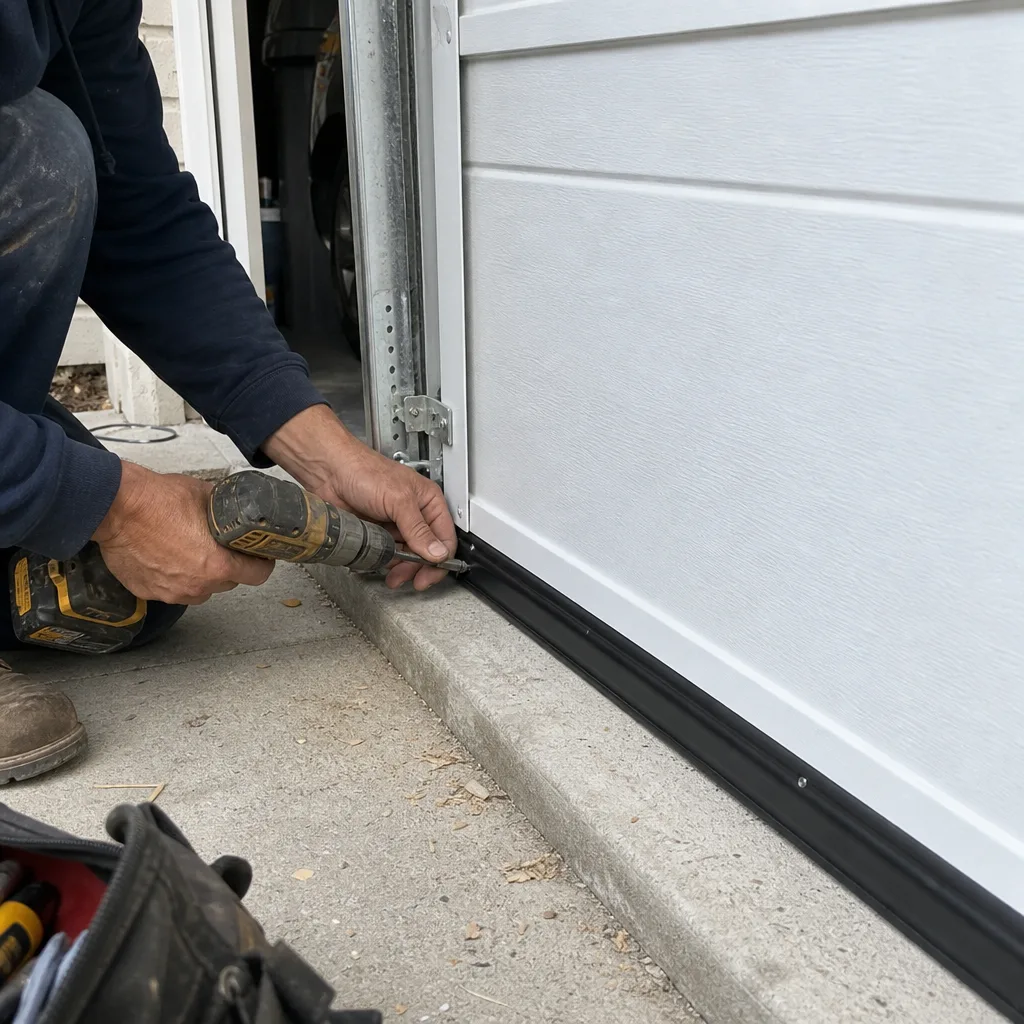
Any Tier 1 symptom, broken spring, frayed cable, or door off track, means you should stop operating the door and make the call. Tier 2 symptoms should be scheduled within two weeks to prevent progression. If you’re unsure what tier you’re looking at, call anyway. The conversation costs nothing and you’ll get a direct answer from a person who works on garage doors in Cumming every day. Servo Garage Doors Cumming home is our anchor page for everything we do. For full door replacement, see Garage Door Installation in Cumming. Servo Garage Doors Cumming offers free estimates throughout Cumming and north Forsyth County. Call (470) 758-8863 and a live person answers, 24/7, including holidays.
Frequently Asked Questions
The most common warning sign is a door that feels heavier to lift manually or an opener that audibly strains more than it used to. Before the loud bang of a torsion spring failure, most springs lose tension gradually over a period of weeks, and the door gets progressively harder to move. Call (470) 758-8863 if your door has gotten noticeably heavier, and we’ll quote a spring inspection with a written price before any work starts.
Torsion spring replacement in Cumming typically runs $250 to $450 for a single spring and $350 to $600 for a pair, depending on the spring’s wire diameter and cycle rating. We always provide a flat, written price and written scope before any work begins, per Clause 1 of The Haven Standard, and the technician photographs the failed spring before quoting the replacement. Call (470) 758-8863 for an exact price on your door.
Yes. Grinding from worn rollers is one of the most common same-day repairs we perform in Cumming, and roller replacement typically takes under an hour on a standard two-car door. We carry a range of roller sizes on the truck, the price is quoted and agreed before any work starts, and you receive a photo record of the worn rollers we removed. Call (470) 758-8863 for service today.
An opener that reverses without an obstruction is triggering its force-limit circuit because it’s detecting more resistance than it’s programmed to expect, usually from a door that’s grown heavier as springs fatigue or rollers seize. The opener is functioning correctly and telling you the door needs service. Call (470) 758-8863 and describe the symptom. We’ll help you determine whether it’s a door problem or an opener problem before anyone comes out.
Yes. Our trucks are stocked with torsion springs in common sizes, rollers in steel and nylon, hinges, cables, and replacement opener parts including logic boards and gears for major brands. The goal is to complete the repair on the first visit with a written price agreed before any work starts. Call (470) 758-8863 with your opener’s make and model and we’ll confirm parts availability before we dispatch.
No. The price we quote before arriving is the price you pay unless you approve a written change order for additional scope, and that change is documented in writing before the additional work is performed. This is Clause 1 of The Haven Standard and it’s been our operating rule on every job since 2015. Estimates are free. Call (470) 758-8863 to get yours.
The Bottom Line
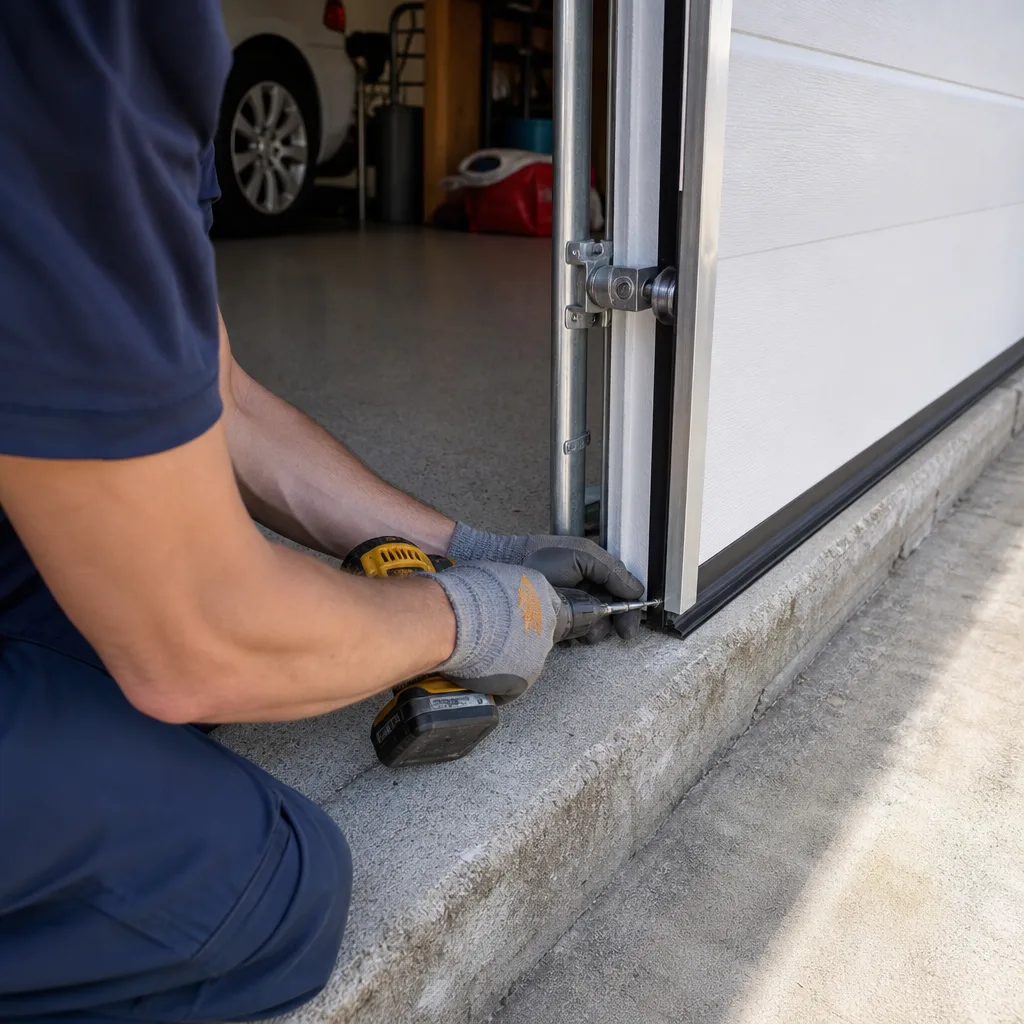
Your garage door talks to you. The grinding roller, the drifting door, the opener that reverses for no apparent reason, each one is a specific symptom pointing to a specific component with a predictable failure trajectory. The skill is in the mapping, and now you have the map. In Cumming, where the climate treats springs and rollers harder than most places, monthly attention to these warning signs is cheap insurance against the emergency call nobody wants to make. When a symptom appears, photograph it, assign it a tier, and if it’s Tier 1, call (470) 758-8863. Someone answers, the price is written before the work starts, and the photo record you receive documents what we found and what we did.
Written by Marcus Deller, Owner at Servo Garage Doors Cumming, serving Cumming since 2015.