
Last updated September 20, 2026
Full 25-point door and opener safety check with every visit - springs, cables, rollers, tracks, and your LiftMaster or Chamberlain opener included
You get a price before we start. It does not change when the truck arrives.
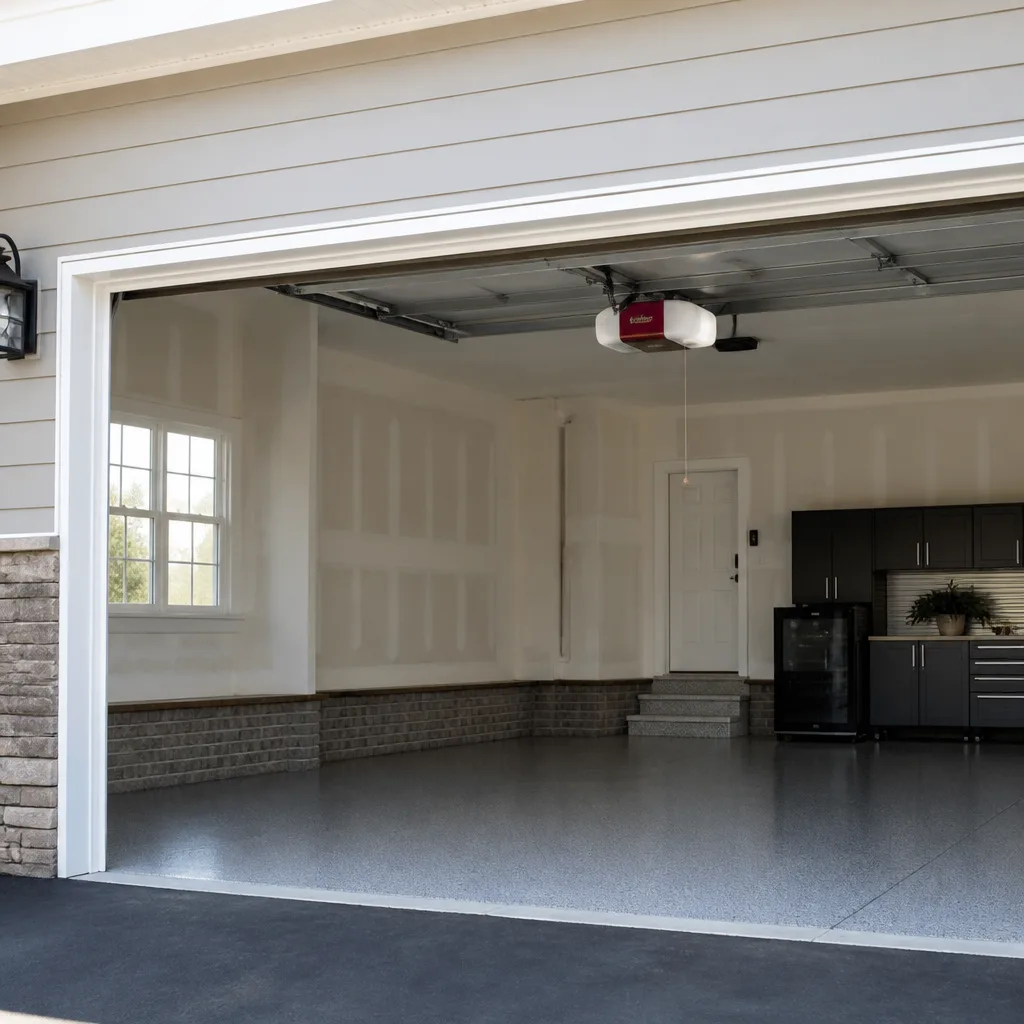
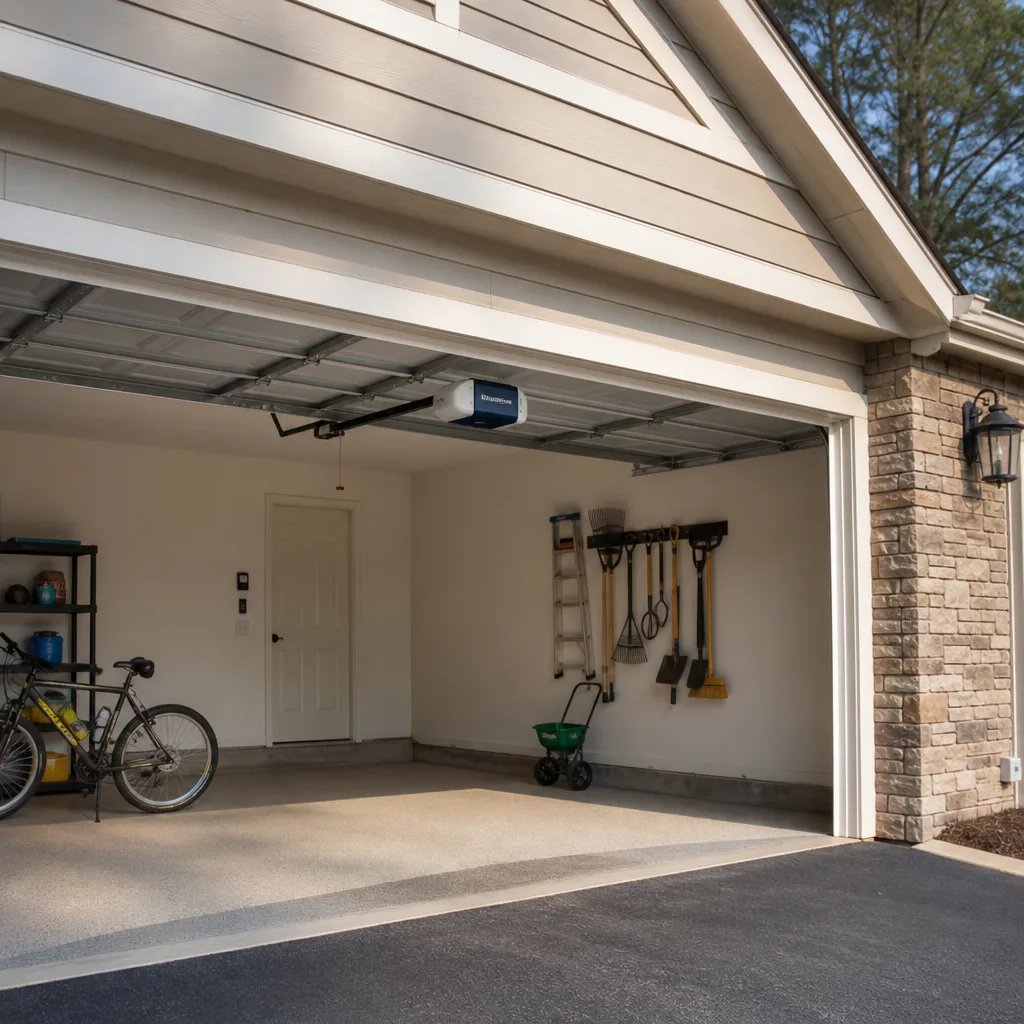
 Before
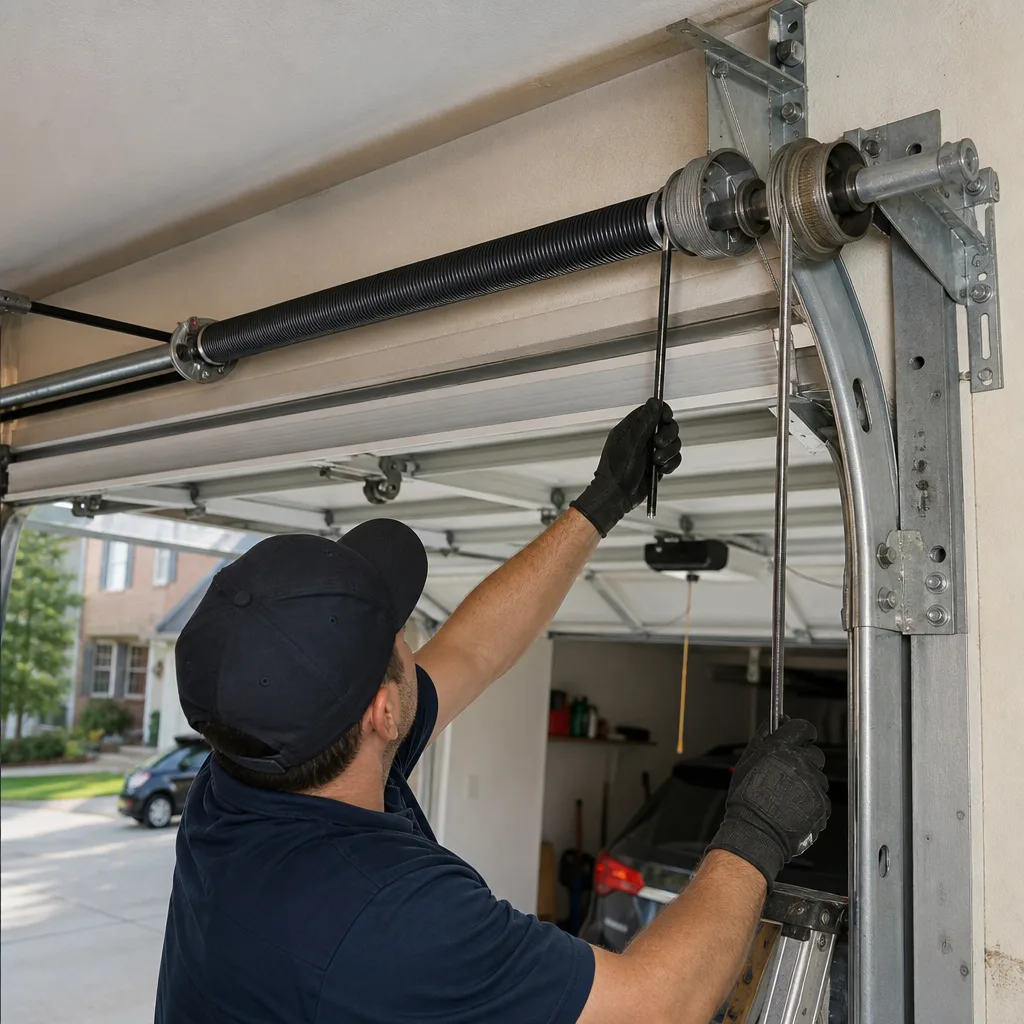 After
After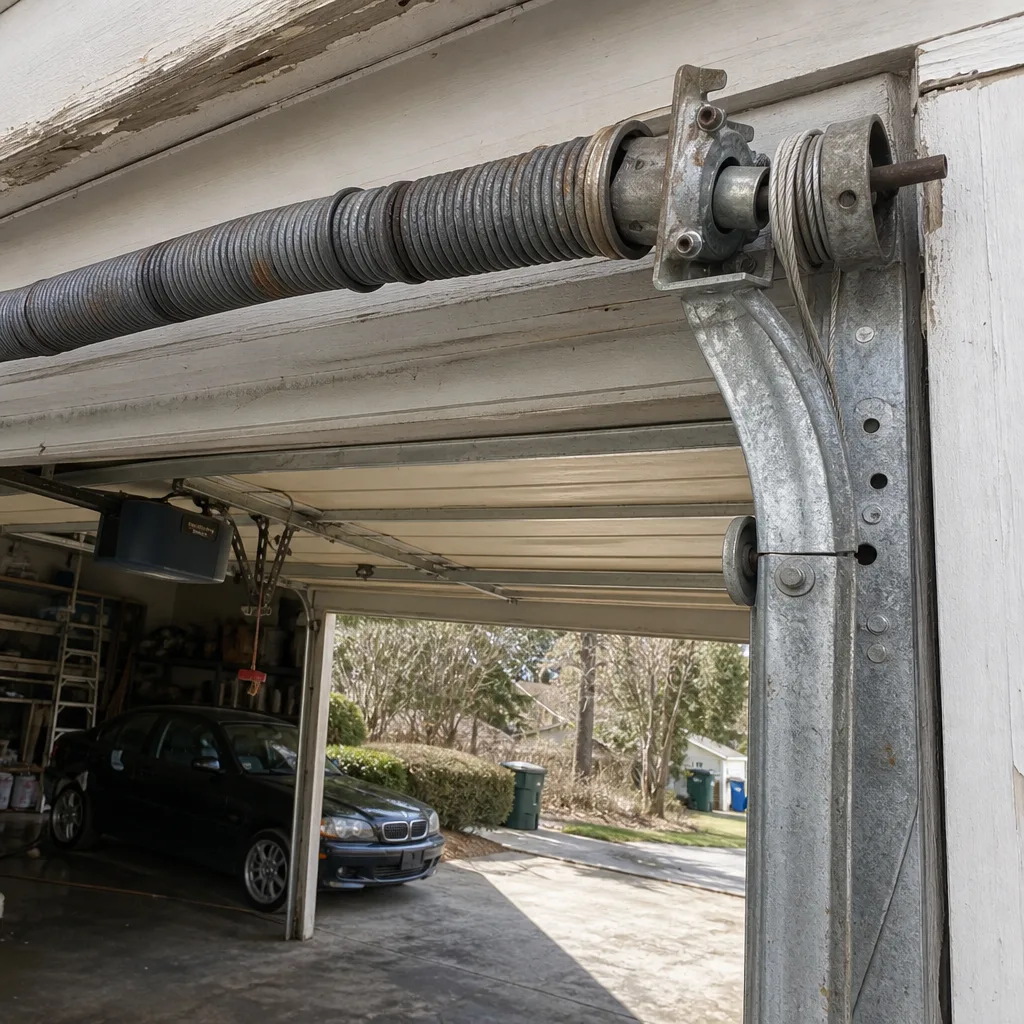 Before
 After
After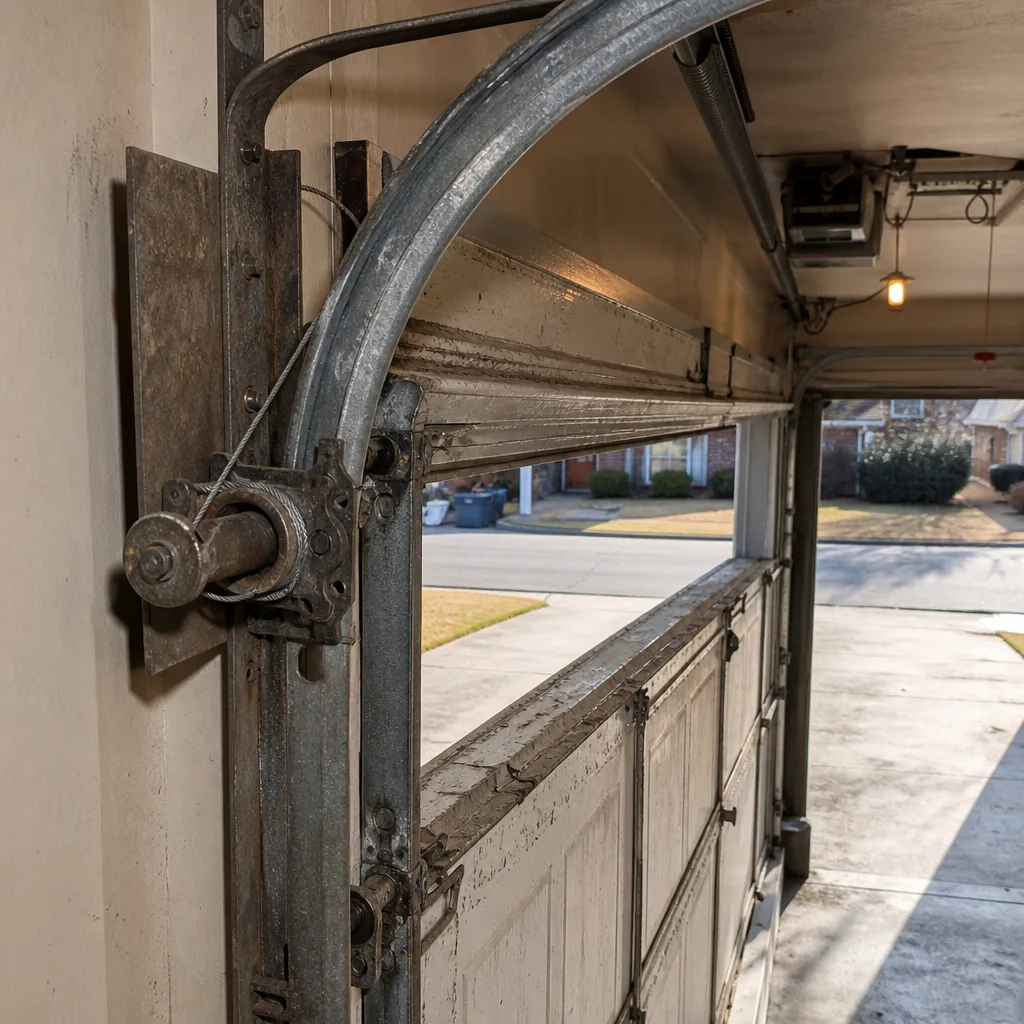 Before
 After
AfterSeasonal Garage Door Care for Cumming: Year-Round Homeowner’s Guide
Torsion springs in Cumming fail disproportionately in January and February - not because they’re old, but because steel loses ductility below 40°F and springs already carrying fatigue stress from a full year of cycles are most vulnerable to that cold-morning snap. Here’s what most homeowners never learn: that January failure was set in motion the previous March, when Forsyth County’s pollen load began packing into the roller tracks. This guide walks you through what actually happens to your garage door across four Cumming seasons, what to check, when to act, and what you can safely handle yourself versus when to make a call. For DIY vs professional garage door help in Cumming, read our decision guide.
We’re Servo Garage Doors, and we’ve been repairing doors in Cumming since 2015. What follows is the seasonal maintenance pattern we see repeated across thousands of local service calls, organized the way the problems actually arrive.
Quick Answer
Seasonal garage door maintenance in Cumming, GA means four targeted checks per year: cleaning pollen and debris from tracks and sensors each spring, checking track spacing and panel clearance before summer heat causes thermal expansion binding, inspecting torsion springs and lubricating with low-temperature grease each fall, and watching for freeze-thaw damage to bottom seals and wood panels each winter. Most Cumming homeowners can handle basic cleaning and visual inspection themselves, but spring replacement and track adjustment should always involve a trained technician. A fall torsion spring inspection costs far less than a January emergency replacement.
Table of Contents
- Spring: Pollen, Tracks, and the Bottom Seal
- Summer: Thermal Expansion and the Binding Door
- Fall: The Pre-Winter Torsion Spring Inspection
- Winter: Lubrication Viscosity and Freeze-Thaw Cycles
- Year-Round: Humidity, Wood Doors, and Panel Warping
- Common Mistakes to Avoid
- When to Call a Professional
- Frequently Asked Questions
 Before
 After
AfterSpring: Pollen, Tracks, and the Bottom Seal
Forsyth County sits in one of the heaviest pollen zones in the Southeast. From mid-March through early May, pine pollen coats every exterior surface, and your garage door’s roller tracks collect it in a way most homeowners never see until the door starts grinding. The pollen itself isn’t the problem - it’s what happens when that fine yellow dust mixes with the existing grease in your tracks and rollers.
That mixture forms a gritty paste that accelerates roller wear. In Cumming, we routinely see nylon rollers with flat spots by year five, and the cause traces back to pollen-laden grease packing into the roller bearing. Cleaning the tracks is the single highest-impact spring task you can do yourself.
Spring cleaning protocol for Cumming homeowners:
- Close the door fully and pull the release handle to disconnect the door from the opener. Work only on the vertical tracks - the horizontal sections require a ladder and are better left to a technician.
- Use a dry microfiber cloth to wipe the inside of each vertical track from bottom to top. Do this before any lubricant touches the track.
- Avoid compressed air. Blowing pollen-laden grease drives the grit deeper into the roller bearings and behind the track brackets. What starts as a surface contamination becomes an internal wear problem.
- Apply a small amount of garage-door-specific lubricant to the roller ball bearings themselves, not the track. The track surface should stay dry - rollers are designed to roll on a clean track, not slide through grease.
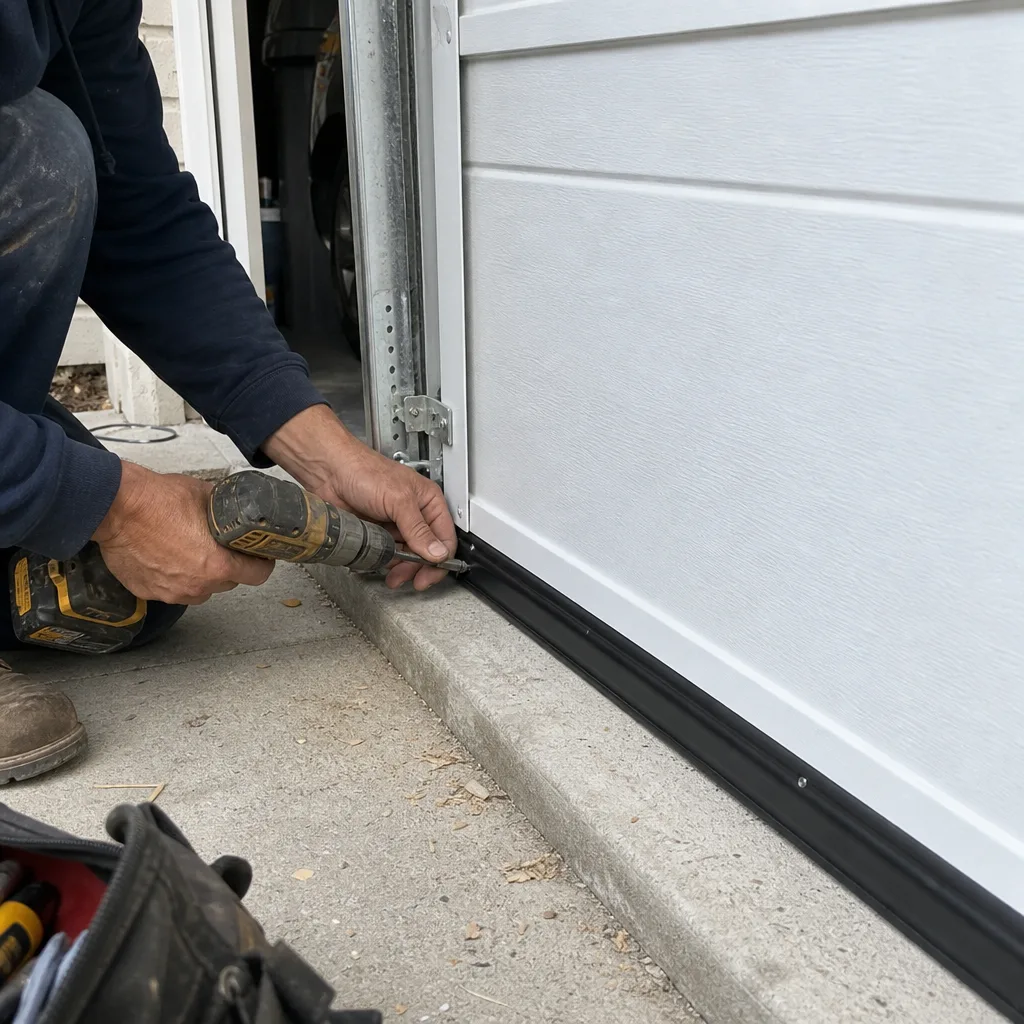
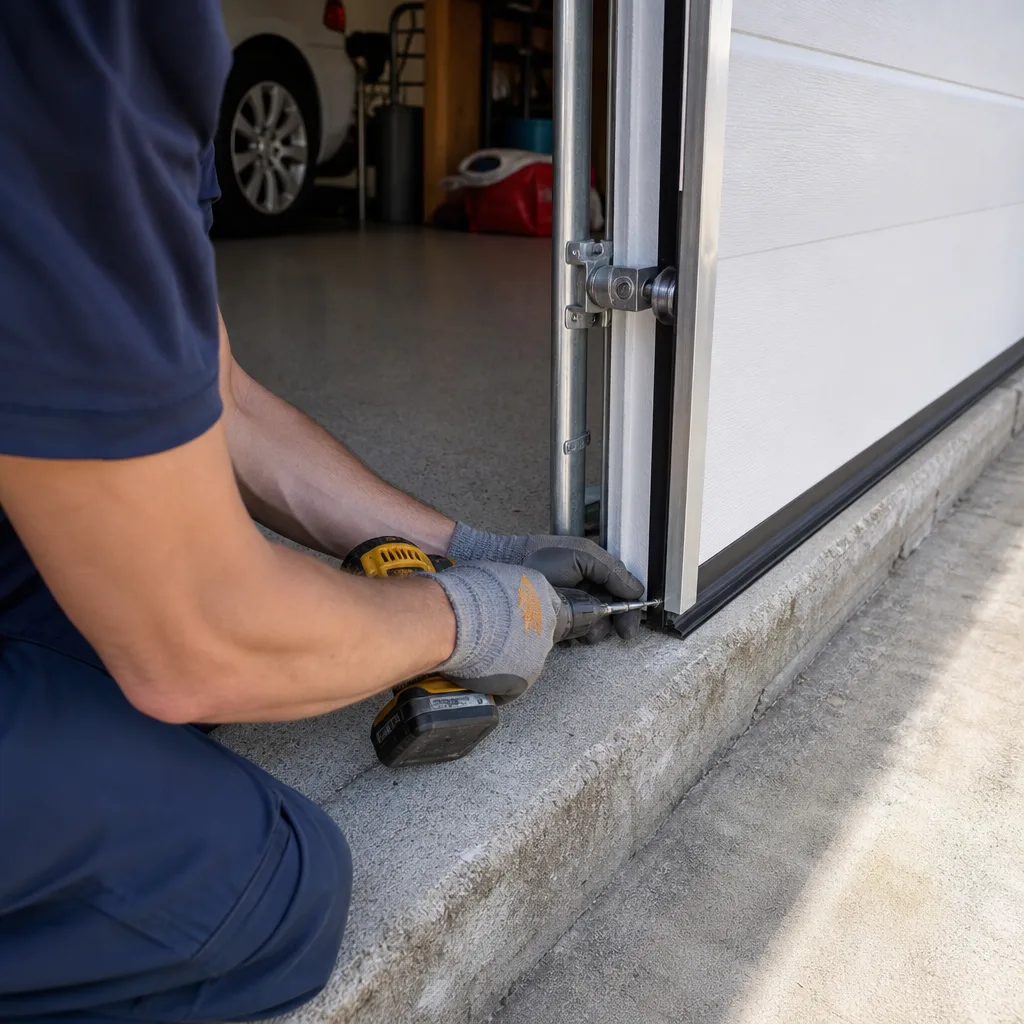
- Inspect the bottom seal along the full width of the door. Cumming’s spring rains pool at the base of doors on any driveway with even a 1-degree slope, and a cracked seal lets that water, plus pollen, into the garage.
If your bottom seal is cracked, split, or showing daylight at the corners, it should be replaced before summer thunderstorms arrive. A failed seal in April means standing water in the garage by July. If you need a Garage Door Repair in Cumming technician to replace that seal, it’s a 30-minute job with the part on the truck.
Summer: Thermal Expansion and the Binding Door
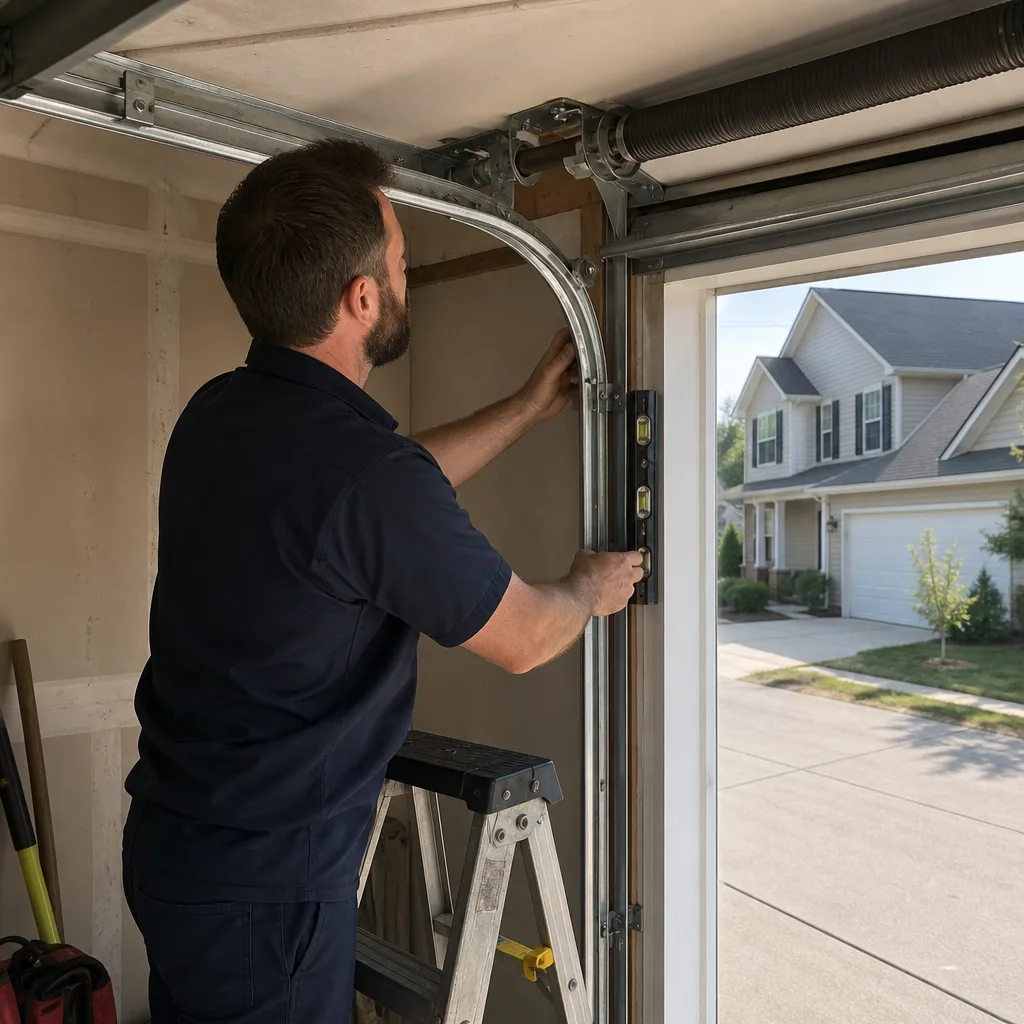
Here’s a scenario we hear every July: “The door runs fine in October, but right now it shudders halfway up and sounds like it’s fighting something.” That’s thermal expansion, and in Cumming’s summer temperatures it’s predictable physics.
Steel door panels expand as they heat. A 16-foot-wide door can grow by as much as 1/8 inch in direct sun when ambient temperatures climb above 90°F and the panel surface hits 140°F or more. If your track spacing was set tight - which is common on older installations and on doors that have settled - that expansion makes the panel edges press against the track sidewalls. The door binds, the opener strains, and the homeowner assumes they need a new door.
What they usually need is a track spacing adjustment. The correct clearance on most residential doors is between 1/4 inch and 3/8 inch on each side, measured at the midpoint of the vertical track. If your door runs smoothly at dawn and binds by 3 p.m., that’s the test: it’s not a failing opener or a bad panel. It’s the track, and it’s adjustable.
What to check in summer:
- Run the door at midday when panels are hottest. Note any hesitation, shuddering, or scraping sounds.
- Look at the gap between the panel edge and the track on each side. If it’s visibly uneven - tight at one point, wider at another - call for an adjustment.
- Listen for opener strain. If the motor’s pitch changes under load and the door moves in small jerks rather than one smooth motion, the opener is working against friction.
- Check the weatherstripping on the side jambs. Summer heat can cause rubber stripping to deform and pull away from the jamb, leaving gaps.
If the door binds in July but runs fine in October, record a video of it on your phone and show it to whoever comes out. We’ve fixed doors where the problem only presented at 4 p.m. on a 95-degree day - the video makes the diagnosis faster and eliminates the guesswork. A track adjustment is also one of the least expensive repairs in our trade, and it’s always quoted with a flat written price before we touch anything, per Clause 1 of The Haven Standard.
Fall: The Pre-Winter Torsion Spring Inspection
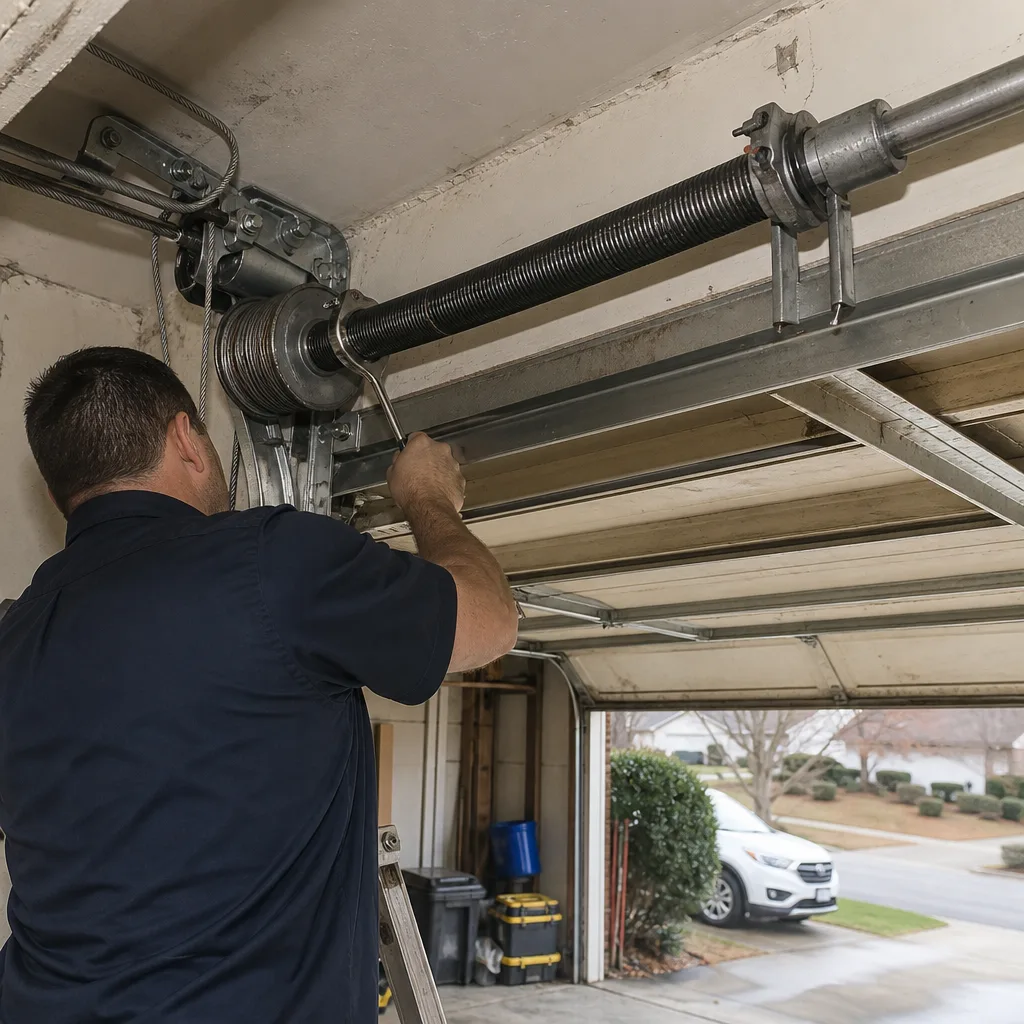
This is the section that saves Cumming homeowners from the most expensive and most inconvenient failure of the entire year: the January torsion spring break. Steel loses ductility as temperatures drop. Below 40°F, a spring under tension becomes measurably more brittle. Springs that have accumulated fatigue from 10,000 to 12,000 open-close cycles - roughly five to seven years of normal use for most Cumming households - are the ones that snap on the first genuinely cold morning of winter.
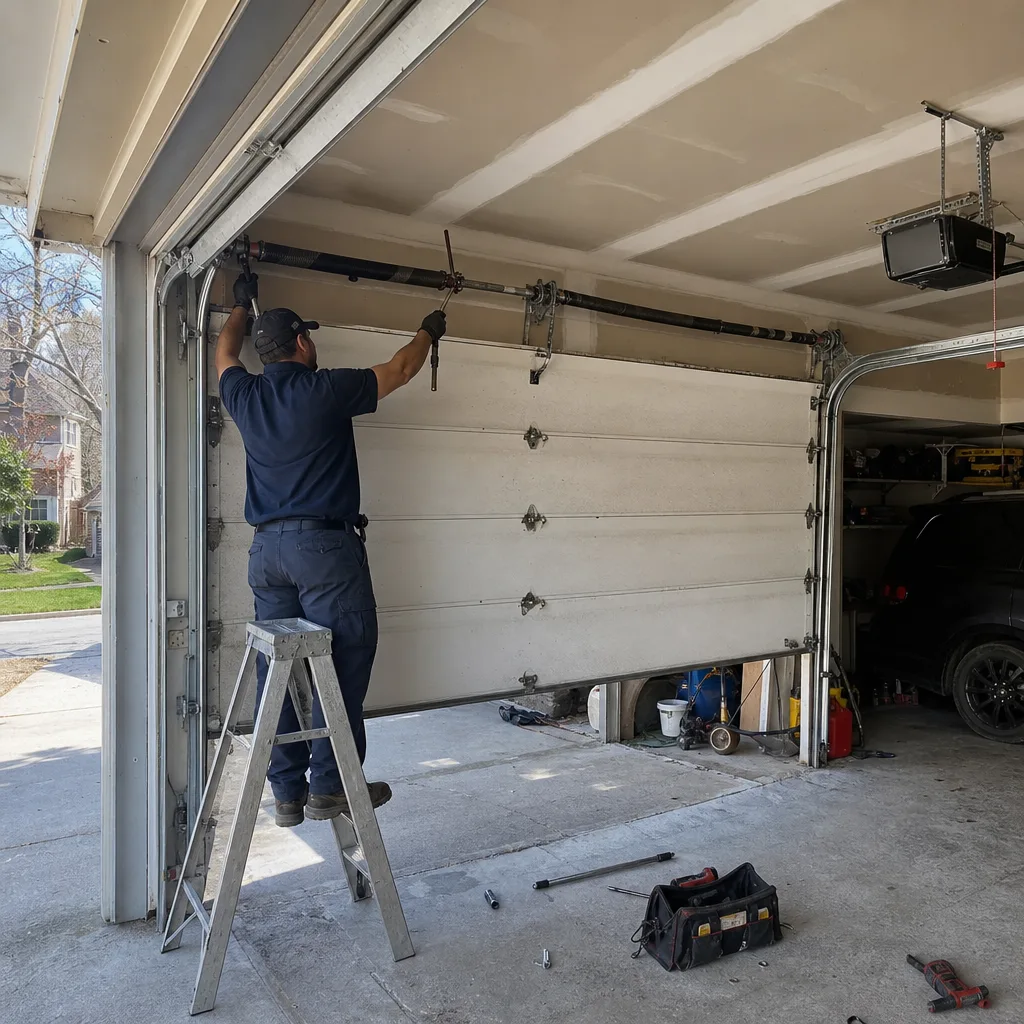
Your door’s torsion spring mounts above the opening, parallel to the header, and it carries the entire weight of the door every time it moves. When it fails, the door typically won’t lift more than a few inches, even with the opener running. That’s a call for emergency service, usually on the coldest day of the year.
The fall inspection, step by step:
- Look at the coil ends of the spring first. Run your eye along the spring from one end to the other. A healthy spring has consistent, evenly spaced coils. A spring near failure shows uneven spacing, where coils have separated or compressed. If you see a gap that’s noticeably wider than its neighbors, that spring is telling you it’s near the end.
- Check the winding cone. The winding cone is the metal collar at each end of the spring where the spring mounts to the shaft. Look for cracks radiating from the set screws, or any signs that the cone has slipped or rotated. A cracked winding cone can fail catastrophically, and it’s a problem that’s visible months before it lets go, if you know to look.
- Look at the center bracket. Most Cumming doors have a stationary center bearing where the torsion shaft passes through. A worn bearing shows up as visible wear on the shaft itself, and you’ll often hear a dry squeal when the door runs.
- Check the balance. Disconnect the opener with the door closed, then lift the door manually to the halfway point and let go. A balanced door stays where you put it. If it falls or rises, the spring has lost tension and it’s doing less work than it should - which means the opener is doing more.
If you see uneven coil spacing, a cracked winding cone, or your door fails the balance test in October or November, proactive replacement will cost you a standard service call, not a holiday emergency rate. A torsion spring replacement in Cumming typically runs $200 to $350 for a standard two-spring system, parts and labor included, and it should come with a written warranty. See our garage door cost breakdown for Cumming homeowners for full 2026 pricing details. If your existing springs are seven years old or older, discussing replacement before winter isn’t alarmist - it’s the math on cycle ratings.
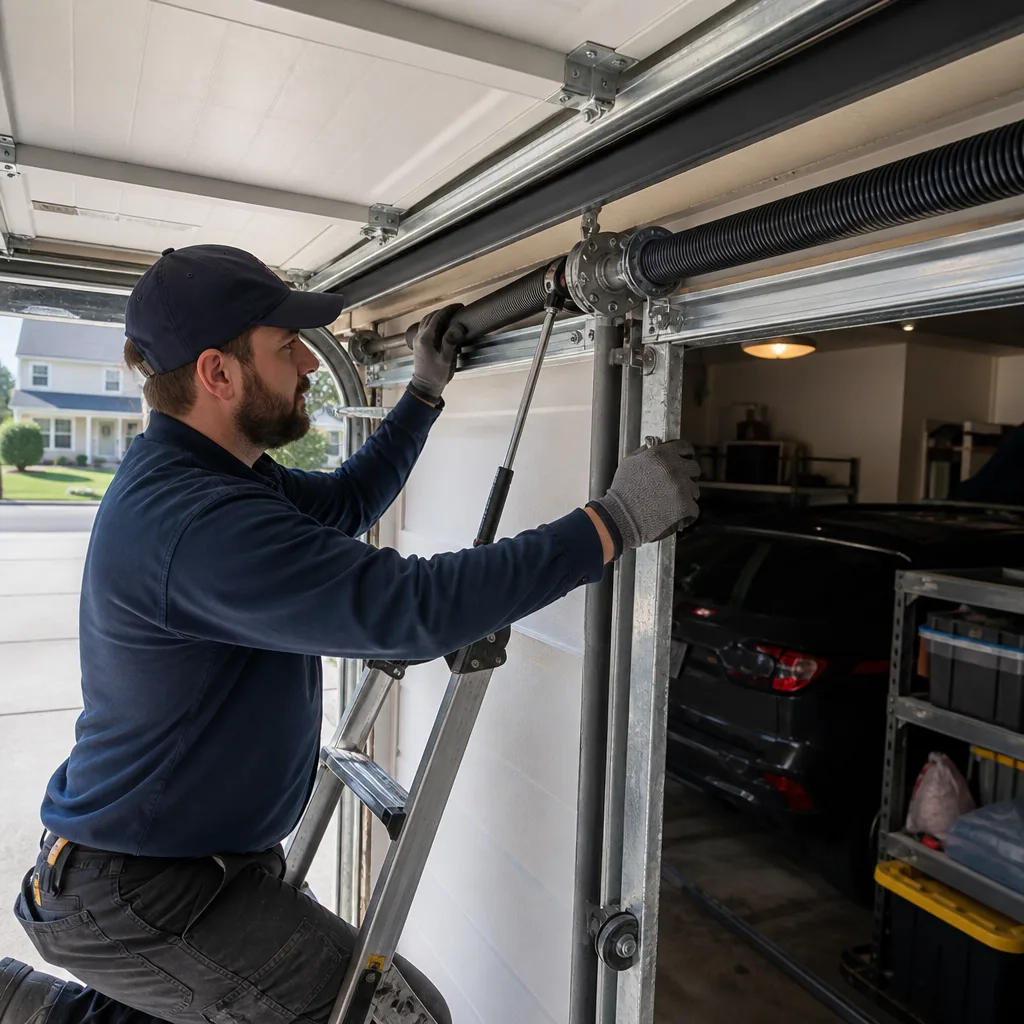
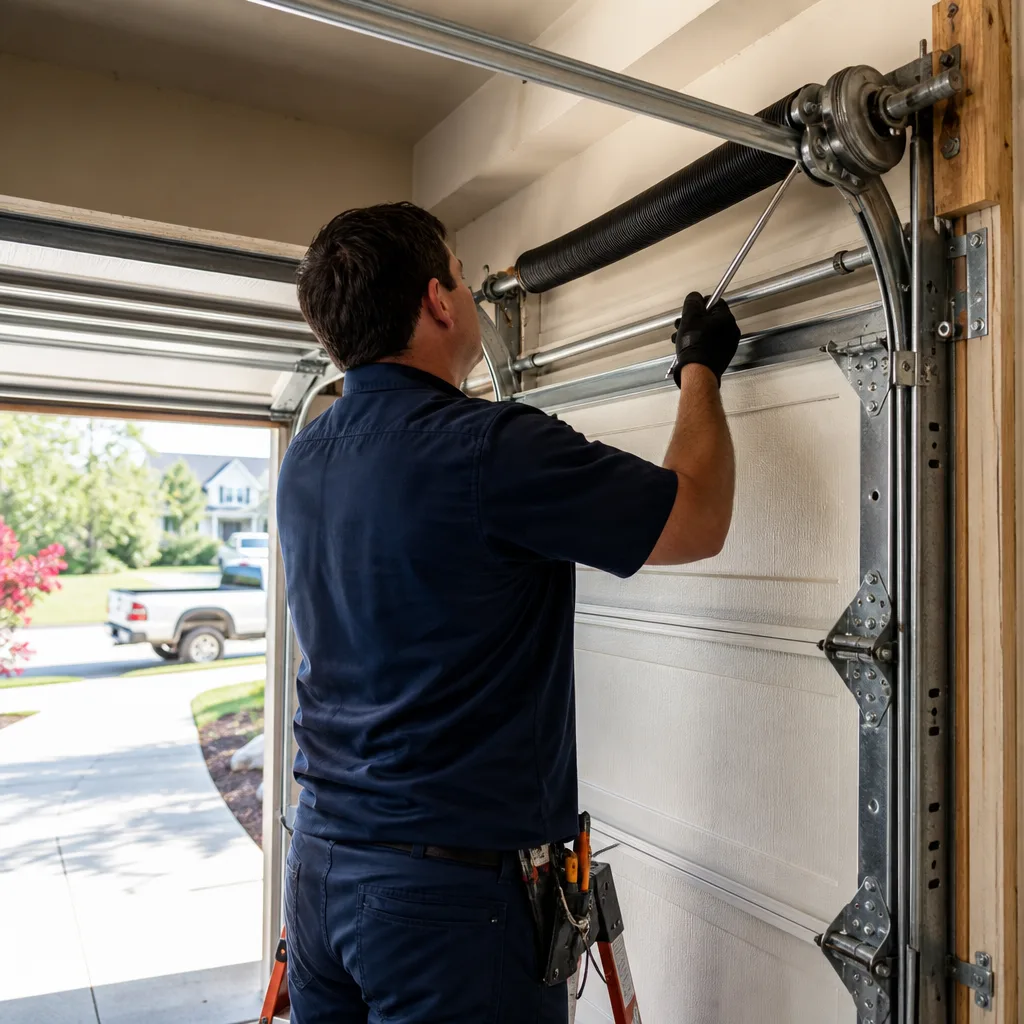
We’ll say this plainly: torsion springs carry lethal tension. The inspection above is safe. Removal and replacement is not a DIY job - the winding and unwinding procedure requires proper bars and experience, and the consequence of a mistake is severe injury. If the inspection shows anything suspicious, call someone who does this every day.
Winter: Lubrication Viscosity and Freeze-Thaw Cycles
Most garage door lubricants are formulated for moderate temperatures. Standard white lithium grease, the go-to product in most hardware stores, thickens noticeably below 40°F. That’s a problem in Cumming, where winter mornings routinely start in the 20s and 30s.
When lithium grease thickens, rollers that moved freely in September start dragging in January. The opener works harder, the motor runs hotter, and the door moves in jerky increments. The fix is straightforward: use a garage-door-specific lubricant rated for low temperatures. Look for a product that states a working range down to at least 0°F, and apply it to roller bearings, hinges, and the torsion spring coils themselves - never to the track.
Winter-appropriate lubricants and what to avoid:
- Use: Garage-door-specific silicone or Teflon-based lubricants. These remain fluid at low temperatures and don’t attract the pollen and dust that make springtime grease so abrasive.
- Avoid: White lithium grease in the winter months. It thickens in sub-40°F temperatures and collects debris year-round.
- Avoid: WD-40 or any penetrating oil. These products are solvents, not lubricants. They strip away existing lubricant and leave metal surfaces drier than before.
- Apply sparingly. A single pass on each roller bearing and hinge pin is enough. More isn’t better - it’s a magnet for the spring pollen that’s coming in three months.
Wood doors face a second winter issue that steel doors don’t: freeze-thaw damage to the bottom seal. When water gets trapped between the seal and the wood panel, a hard freeze expands it, prying the seal away from the door and exposing the wood to direct moisture. After a few freeze-thaw cycles, the seal fails and the panel bottom starts absorbing water. In Cumming’s climate, where we see freeze-thaw swings a dozen or more times each winter, wood doors need a seal inspection every January. A failed seal on a wood door is a panel-warping problem waiting for spring humidity to finish the job.
Year-Round: Humidity, Wood Doors, and Panel Warping
Cumming’s humidity swings are harder on wood garage doors than anything else in the system. Between summer average relative humidity above 70% and winter indoor heating dropping it below 40%, wood panels expand and contract across a wide range. The movement is unavoidable - but the damage it causes is preventable if you inspect at the right intervals.
The failure pattern is predictable. Panel joints open slightly during dry winter spells, letting moisture into the end grain. Then humid summer air swells the wood, and the cycles repeat. Within three to five years of missed maintenance, the panel gaps become permanent, paint adhesion fails at the bottom rail, and panels start cupping or warping. At that point, replacement is the only honest recommendation.
The maintenance interval that prevents this:
- Twice yearly - spring and fall: Inspect every panel seam and joint for paint cracks or separations. A hairline crack in March becomes a moisture channel by July.
- Annually - fall, before winter: Touch up any paint cracks and reseal panel joints. Use an exterior-rated flexible sealant compatible with your door’s finish, and allow proper cure time before cold weather.
- After every hard freeze: Run a hand along the bottom panel edge. If you can feel the wood moving or if the seal has pulled away, address it immediately.
- Check the seal between panels. Wood doors from Clopay and Amarr typically use a tongue-and-groove system or an internal seal. If you see daylight through a panel seam, the internal seal has failed and the panel is already taking on moisture.
For homeowners with Wayne Dalton or Craftsman wood doors that are approaching ten years of Georgia humidity, we recommend a professional inspection that includes moisture readings at the panel bottoms. Catching panel rot at the early stage allows for localized repair. Waiting until the rot is visible from the outside means full panel replacement, which on a custom wood door can run several times the cost of a standard panel.
If you’re considering a new door and want to avoid the humidity problem altogether, ask about insulated steel doors with composite bottom rails. We install new garage doors throughout Cumming, and for this climate, the composite-bottom doors have proven to hold up better than wood at the panel base. A Garage Door Installation in Cumming consult includes a written quote with the exact door, the exact labor, and the exact warranty terms before you commit to anything.
Common Mistakes to Avoid
- Lubricating the track. The track is a rolling surface, not a bearing. Grease on the track turns pollen into grinding paste and shortens roller life. Lubricate the bearings, hinges, and springs - never the track itself.
- Ignoring a door that binds in July because it “works fine the rest of the year.” Thermal binding is not intermittent - it’s a structural clearance issue that worsens every summer. Left alone, it wears out rollers and strains the opener until one of them fails during a heat wave.
- Replacing the opener when the door is the problem. If your door’s spring is weak or the track is misaligned, a new opener will just work harder and fail sooner. Diagnose the mechanical system first.
- Waiting until the spring breaks to think about springs. Torsion springs have a predictable service life measured in cycles. If your door is over seven years old and you haven’t had a professional inspection, the January cold snap is a gamble you don’t have to take.
- Using WD-40 “because it’s in the garage already.” It’s a solvent that strips lubricant. What your door needs is a purpose-formulated garage door lubricant that stays fluid below freezing and won’t attract pollen.
- Skipping the fall balance test. It takes two minutes and tells you more about your spring health than any visual check. An unbalanced door is a spring system doing less work - and an opener doing more.
When to Call a Professional
A few garage door tasks genuinely require a trained technician, and the line isn’t as blurry as you might think. Any work involving torsion springs - inspection is fine, replacement is not - requires specialized winding bars and the experience to use them safely under tension. Cable replacement is in the same category: the cables carry spring tension when the door is open, and a slipped cable can release that tension without warning. Track adjustment also benefits from experience, because a track that’s off by even 1/8 inch will bind in summer heat, and most homeowners can’t see the difference.
If the door comes off its tracks entirely, don’t try to force it back on. Close the door if you can, disconnect the opener, and leave it alone until someone arrives. For anything in this category, Servo Garage Doors Cumming home page explains our written-price-first approach, and you can call (470) 758-8863 for a free estimate. Every quote is flat, written, and agreed before work starts - no exceptions, per Clause 1 of The Haven Standard.
Frequently Asked Questions
Once a year, in the fall, before cold weather arrives. The fall inspection targets the torsion spring, which is the component most likely to fail in January and February when Cumming temperatures drop below 40°F and steel loses ductility. A technician can spot uneven coil spacing and winding cone cracks before they fail, and the replacement is cheaper in October than it is as an emergency in January. Call (470) 758-8863 to schedule an inspection - the price is quoted in writing before the technician arrives. For seasonal guidance, see The Complete Guide to Garage Door in Cumming.
A torsion spring replacement in Cumming typically runs $200 to $350 for a standard two-spring system on a single-car door, and $250 to $450 on double doors, parts and labor included. The exact price depends on spring wire diameter, door weight, and whether the spring cycle rating is standard or high-cycle. Every quote from Servo Garage Doors Cumming is flat and written before work starts.
Yes. Basic track cleaning and roller lubrication are safe for homeowners, provided you follow the right sequence: wipe the tracks dry, apply garage-door-specific lubricant to the roller bearings only, and never use compressed air. The parts that require a professional are the torsion springs, cables, and anything that carries tension, and you should never attempt work on those yourself.
Steel panels expand in heat, and a door that binds in July but runs smoothly in October has insufficient track clearance. The fix is a track spacing adjustment, not a new door or a new opener. If you’re in Cumming and it’s happening to you, call (470) 758-8863 for a written quote on the adjustment - and if another company has quoted you a full track replacement, bring that written estimate in and we’ll give you a documented second opinion.
If you have a written estimate from another company and you don’t fully understand why the work costs what it does, bring it to us. We offer a free second opinion on any written estimate, and we’ll show you the failed component before quoting a replacement - that’s Clause 4 of The Haven Standard, and it’s been our practice since 2015. Garage Door Opener Repair & Installation in Cumming estimates often include opener replacement when the actual problem is a $150 logic board or a worn trolley carriage. We’ll tell you what the part actually is.
A garage-door-specific silicone or Teflon-based lubricant rated for temperatures down to at least 0°F. Standard white lithium grease thickens below 40°F and causes rollers to drag on cold Cumming mornings. Avoid WD-40 and any penetrating oil - those are solvents, not lubricants, and they strip away useful grease.
The Bottom Line
Cumming’s garage door problems arrive on a schedule, and the schedule is predictable: pollen in March, binding panels in July, brittle springs in January, and wood panel warping year-round if you let the humidity win. Each season’s check takes under an hour, costs little to nothing, and prevents failures that cost hundreds and happen at the worst possible time. The fall spring inspection is the highest-value task on the list - it’s the difference between a planned $250 replacement in October and a $400 emergency call on a January morning. At Servo Garage Doors Cumming, every job starts with a written price and ends with a documented photo record, because that’s how it should work. Browse more guides & resources on our blog. Call (470) 758-8863 for your free estimate.
Written by Marcus Deller, Owner at Servo Garage Doors Cumming, serving Cumming since 2015.