
Last updated September 20, 2026
Full 25-point door and opener safety check with every visit - springs, cables, rollers, tracks, and your LiftMaster or Chamberlain opener included
You get a price before we start. It does not change when the truck arrives.
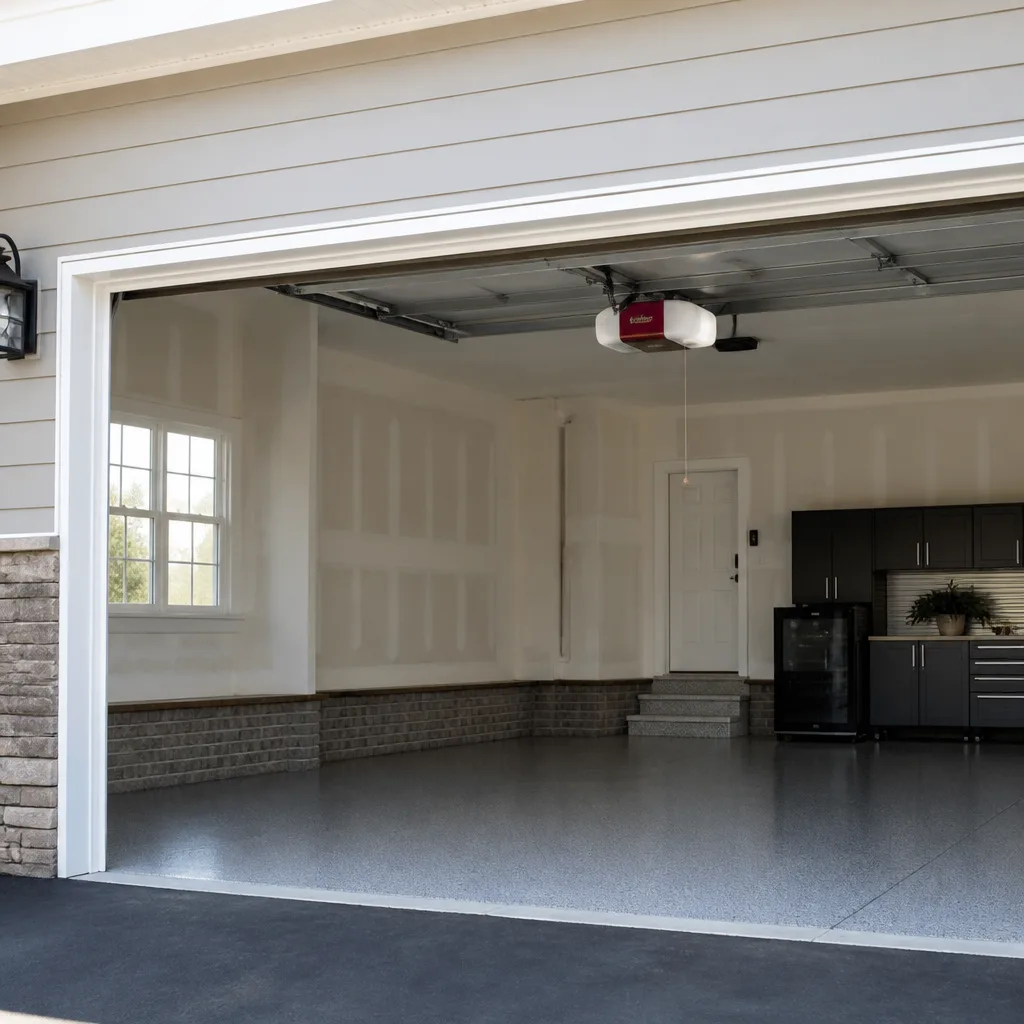
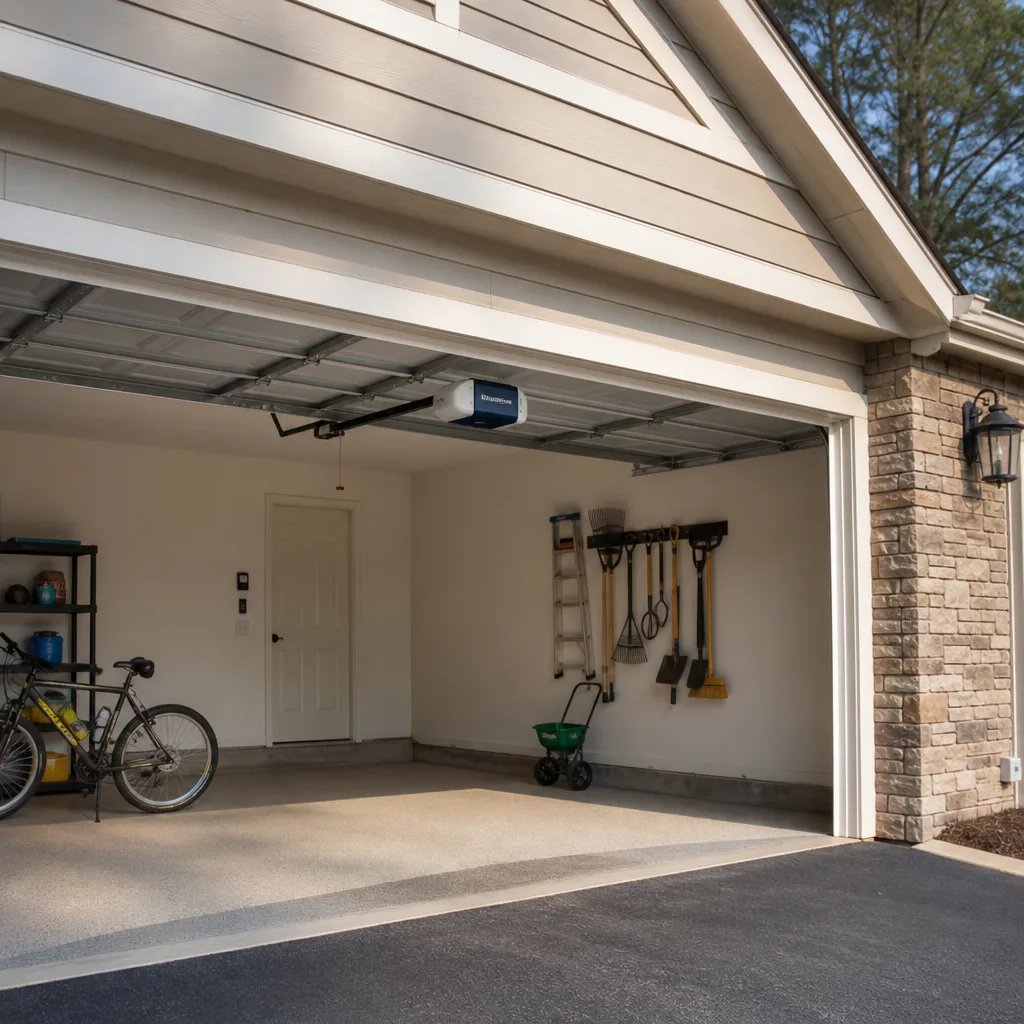
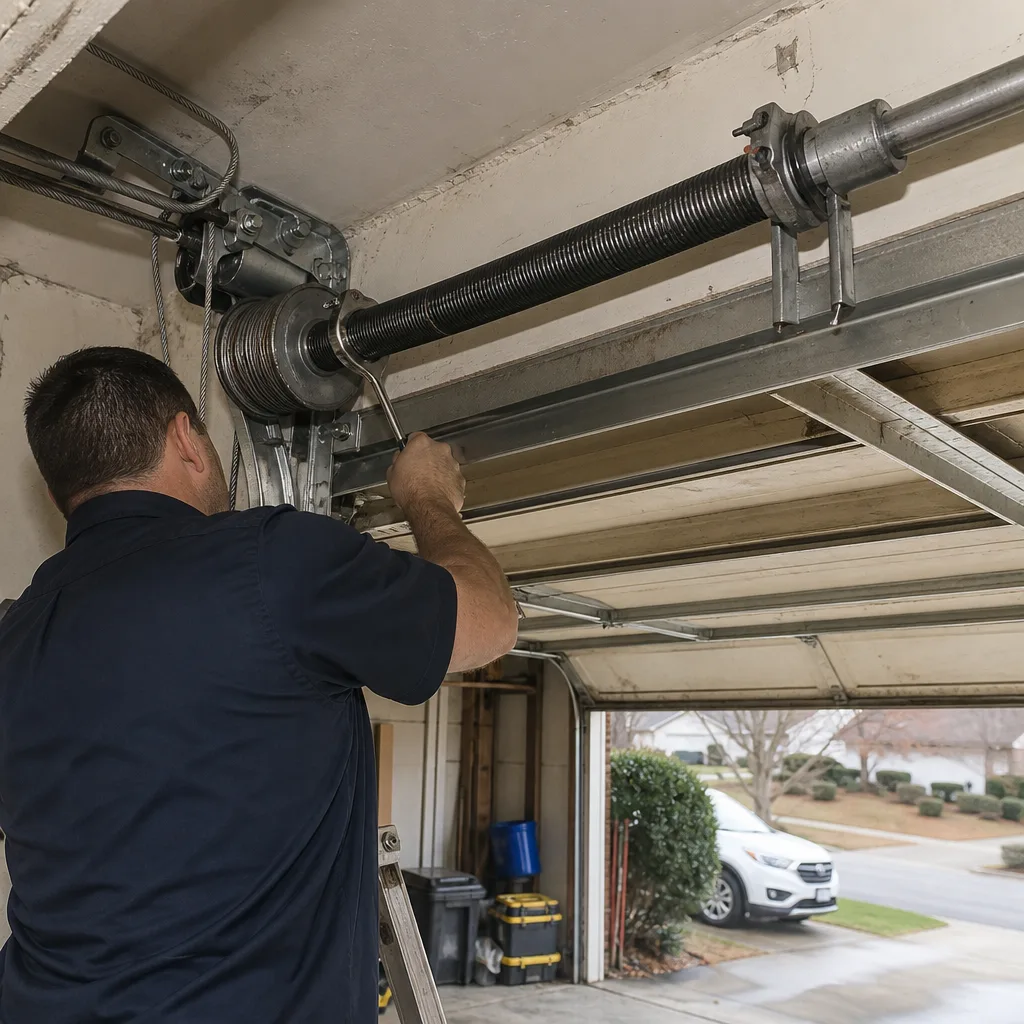 Before
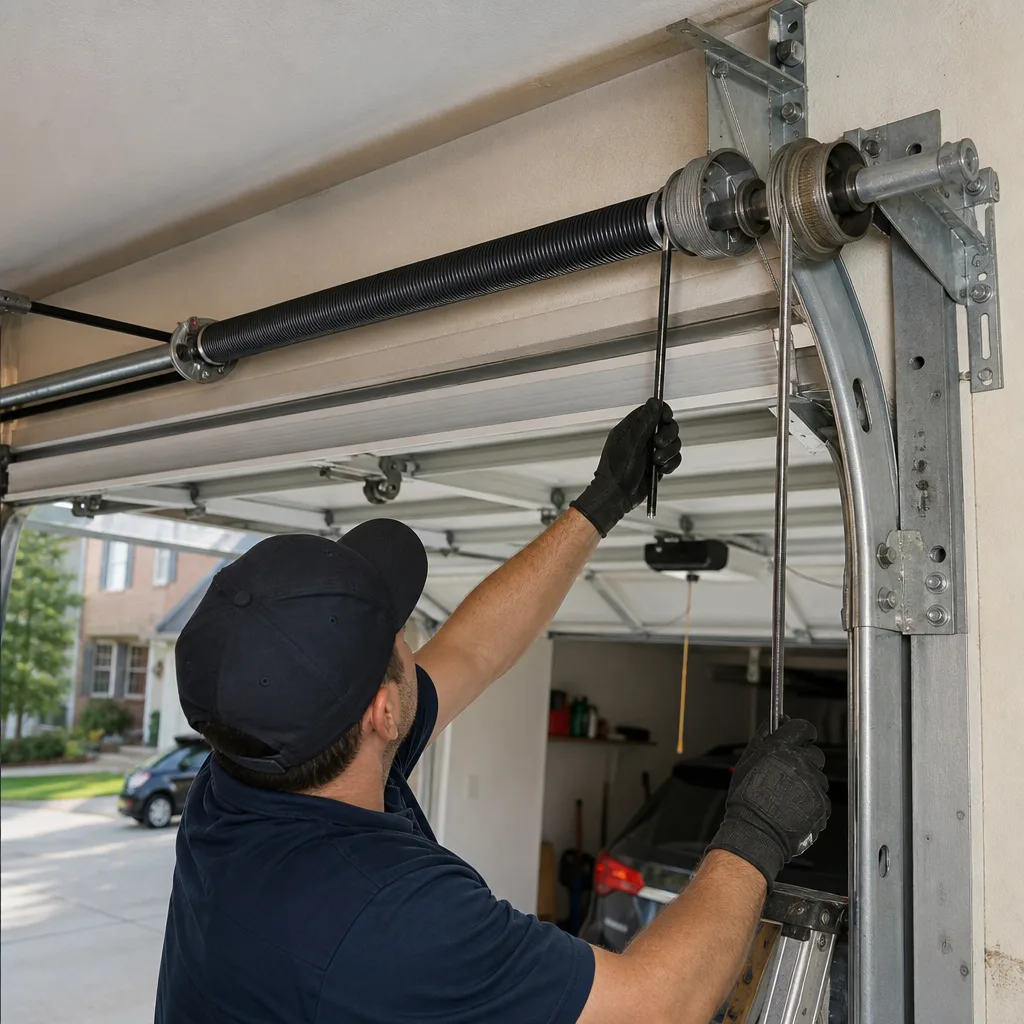 After
After Before
 After
After Before
 After
AfterGarage Door Permits, Codes & Inspections in GA: What You Need to Know
Georgia adopted the 2018 International Residential Code with state amendments, and that single fact changes how garage door permits work in Cumming more than most homeowners realize. A same-size door replacement rarely triggers a permit, but the moment a homeowner enlarges an opening or touches the header above it, they’ve entered territory where Forsyth County wants paperwork. This guide maps the actual permit triggers, the IRC sections that govern them, and what happens at resale when someone skipped the check. For Garage Door Warning Signs: A Cumming Homeowner’s Reference Guide, see our related resource. Most contractors will tell you permits aren’t required because most jobs are simple replacements. The exceptions are where the liability lives.
Quick Answer
In Georgia, replacing a garage door with a door of the same size in the same rough opening typically does not require a building permit. A permit is required when you modify the rough opening, alter or replace the structural header above the door, or install a fire-rated door between an attached garage and conditioned living space. When non-permitted structural work is discovered during a home sale inspection, the liability sits with the homeowner, not the contractor who did the work.
Table of Contents
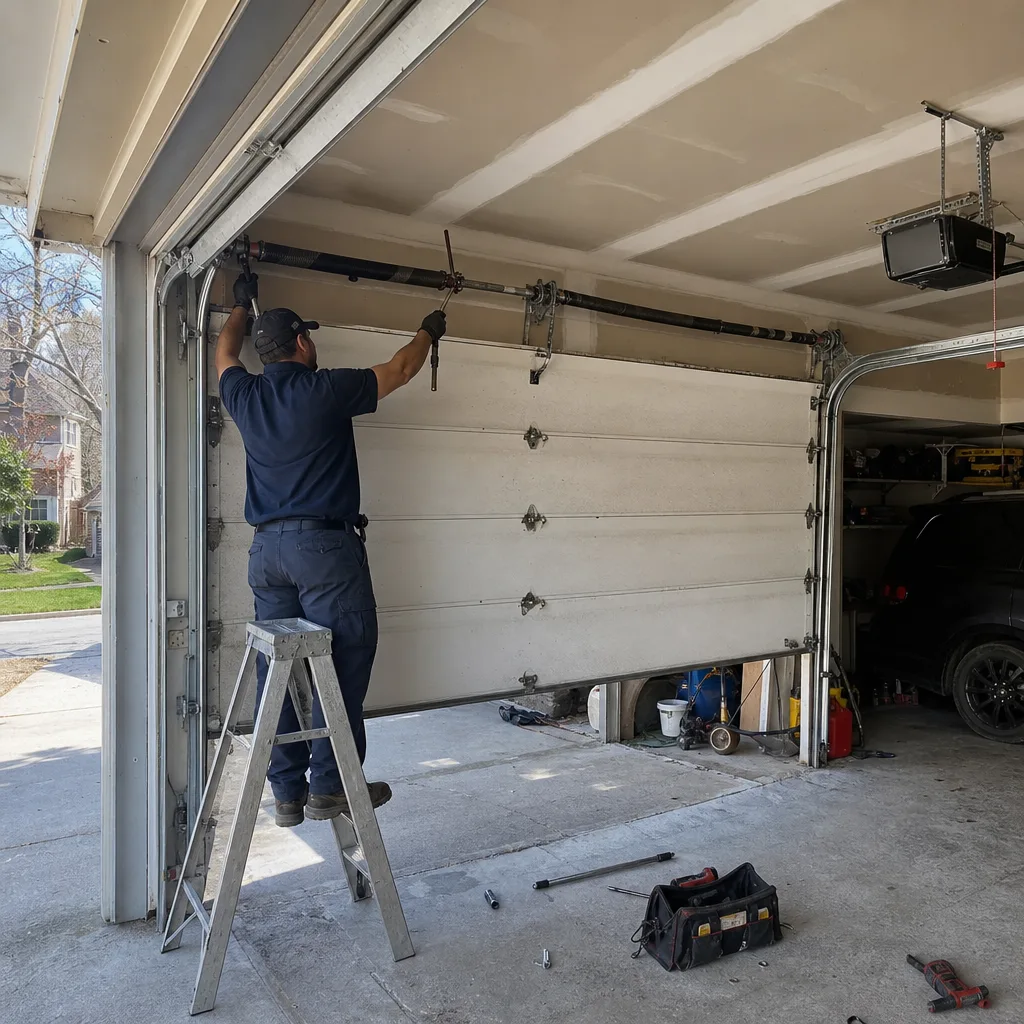
- When Georgia and Forsyth County Actually Require a Garage Door Permit
- The IRC Sections That Govern Garage Door Openings and Headers
- Same-Size Replacement: Why No Permit in Most Cases
- New Rough Openings and Header Modifications: The Permit Trigger
- Fire-Rated Doors Between Garage and Living Space
- Non-Permitted Work at Resale: Where the Liability Sits in Georgia
- Forsyth County Inspection Process for Permitted Garage Door Work
- How to Confirm Your Contractor Pulled the Permit Before Work Starts
 Before
 After
AfterWhen Georgia and Forsyth County Actually Require a Garage Door Permit
Georgia operates under the 2018 International Residential Code with state-specific amendments. Forsyth County enforces that code locally. Under IRC Section R105.1, a building permit is required for any work that involves structural modification, changes to a fire-resistance-rated assembly, or new construction. A garage door replacement that fits the existing rough opening and reuses the existing header falls into none of those categories, which is why most door swaps in Cumming proceed without a permit and without any code issue.
The confusion starts because contractors often generalize. A tech who has replaced two hundred doors in Forsyth County without pulling a permit is technically correct that those two hundred jobs didn’t need one. But that experience doesn’t transfer to an opening that changes size. The permit trigger is not the door itself; it’s what the install does to the structure. Once the rough opening gets wider, taller, or the header above it gets modified, IRC Section R105.1 applies and Forsyth County expects a permit application before work begins.
Here is the plain version we give homeowners in Cumming:
- Same-size door in an existing opening: no permit required in nearly all cases.
- New rough opening where none existed: permit required, including structural plans or an engineered header spec.
- Enlarging the existing opening: permit required because the header span changes.
- Fire-rated door between garage and living space: must meet IRC Section R302.5.1 assembly requirements, and if the wall assembly is modified, a permit may be required.
- Repairs to existing door components: no permit. Springs, panels, tracks, openers, and cables are all maintenance items.
If you’re unsure about your specific project, the Forsyth County Department of Planning and Community Development is the authority to call. The permit office can tell you whether your scope triggers a permit, and their answer is the one that matters, not your contractor’s habit.
The IRC Sections That Govern Garage Door Openings and Headers
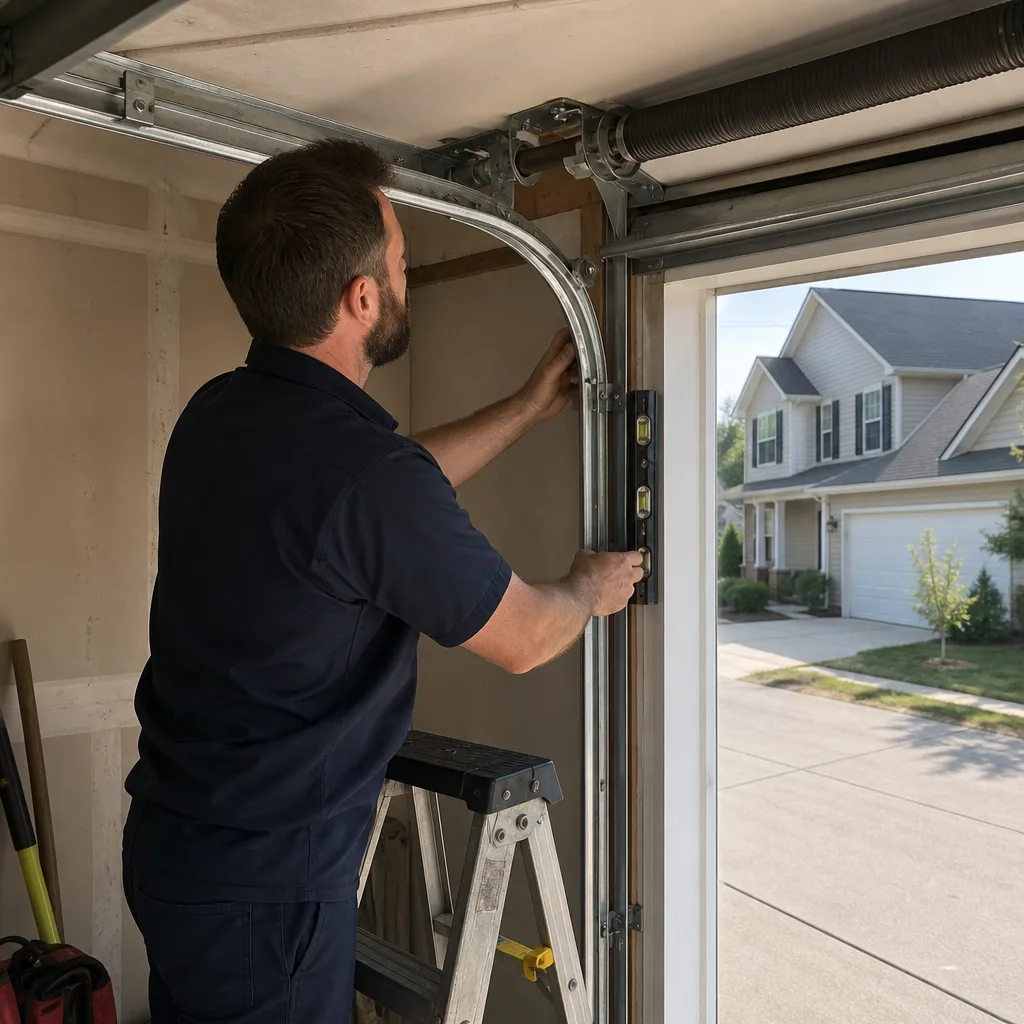
Three IRC sections do most of the heavy lifting for garage doors in Georgia. Knowing them by number is not pedantry; it’s how you verify whether your contractor is quoting code or quoting their memory.
IRC Section R105.1 (Permits Required): This is the enabling section. It says any owner or authorized agent who intends to construct, enlarge, alter, repair, move, demolish, or change the occupancy of a building shall first obtain the required permit. The key word for garage doors is “alter.” A same-size replacement is a repair or replacement of a component, not an alteration of the structure. Enlarging the opening is an alteration, and the permit requirement activates.
IRC Section R603.7 (Steel Headers) and R602.7 (Wood Headers): These sections govern header spans above openings. The header carries the load from above the door, and its required size depends on the span, the load it carries, and whether the wall is load-bearing. When a garage door opening is enlarged, the original header’s span increases, and a header that was adequate at nine feet may be undersized at twelve feet. The building official verifies the header against these tables during the inspection.
IRC Section R302.5.1 (Opening Protection Between Garage and Residence): This is the fire-separation section. It requires that any door between an attached garage and the dwelling unit be either a solid wood door not less than 1 3/8 inches thick, a solid or honeycomb-core steel door not less than 1 3/8 inches thick, or a 20-minute fire-rated door. The door must be self-closing and self-latching. This section applies to pedestrian doors between garage and house, but it matters for garage-to-living-space conversions in Cumming because many homeowners repurpose garage bays into conditioned rooms and install a new wall with a door where a vehicle door used to be.
We’ve seen all three sections cited on correction notices in Forsyth County. The most common citation isn’t the missing permit itself; it’s the header that failed to meet the table after the opening was enlarged without an engineer’s spec.
Same-Size Replacement: Why No Permit in Most Cases
If your existing garage door opening is staying exactly as it is, and you’re swapping a tired door for a new one from Clopay, Amarr, or Wayne Dalton, you’re not altering the structure. You’re removing a component and installing a replacement component in the same location. IRC R105.1 doesn’t classify that as work requiring a permit, and Forsyth County’s permit office will tell you the same thing.
What that means in practice for a Cumming homeowner: you can replace a garage door, the tracks, the springs, the opener, and all hardware without a permit. The work should still be done to manufacturer specifications, and in our experience, the installation quality matters more than any inspection. For Garage Door Repair Maintenance Checklist for Cumming Homeowners, see our routine care guide. A door that’s out of square will chew through rollers and springs, and no inspector will catch that on a same-size swap because no inspector will ever visit the site.
One caveat worth stating plainly: “same size” means the rough opening dimensions, not the door panel dimensions. If your opening is 9 feet wide and the new door is 9 feet wide, fine. If you’re enlarging the opening from 8 feet to 9 feet, that’s a structural alteration and the permit requirement kicks in regardless of what the door manufacturer’s catalog calls “standard size.”
New Rough Openings and Header Modifications: The Permit Trigger
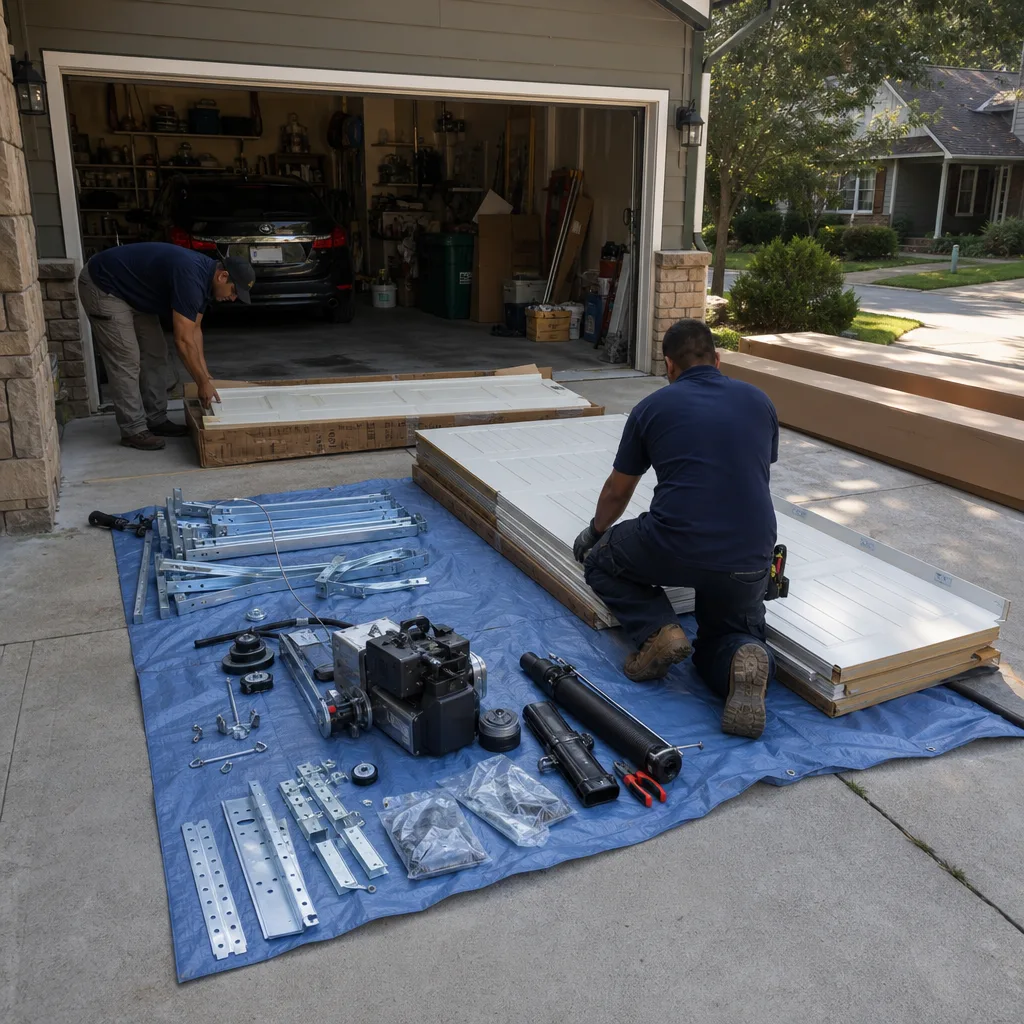
The scenarios that trigger a permit in Georgia are almost always created by remodeling projects, not by door replacements themselves. Here are the situations we see most often in Cumming:
- Converting a carport to an enclosed garage: You’re building new walls where no walls existed. That’s new construction, and the rough opening needs a permit and a header sized to the span.
- Adding a garage bay to an existing garage: Cutting a new opening in a load-bearing wall means modifying the wall’s framing. The header must be designed for the new load path.
- Enlarging an existing opening to fit a larger vehicle: In Cumming, we see this often with newer trucks and SUVs. A homeowner buys a larger vehicle, discovers the existing door is too narrow, and wants a wider opening. The header span changes, and Forsyth County wants a permit.
- Converting a garage bay to living space: The vehicle door comes out, a wall goes in, and the new wall needs a door that meets the fire-separation requirements of IRC R302.5.1. That wall is a new assembly, and the permit covers both the wall and the door.
- Replacing a damaged header: If water intrusion or termite damage has compromised the header above your door, and the repair involves replacing it, the work is structural. Even if the new header is theoretically the same size, the building official will want to verify the replacement meets current code.
The header is the load-bearing beam above the door opening, the horizontal member that carries the weight of the wall and roof above the garage door. When the opening gets wider, the header has to span farther, and the forces at the bearing points go up. That’s why a wider opening isn’t just a bigger hole; it’s a redesigned load path. A licensed contractor in Forsyth County should know this and should tell you the permit is required before they touch the framing. If you’re selecting a pro, our guide on How to Hire a Garage Door Contractor in Cumming: A Step-by-Step Guide can help. If they don’t, that’s your signal to ask harder questions.
Fire-Rated Doors Between Garage and Living Space
IRC Section R302.5.1 is the section that surprises homeowners who convert a garage bay to a home office or a bedroom. The code doesn’t care what you call the room. If the space on the other side of the wall is living space, the door between the garage and that room must meet the fire-separation requirement.
The code accepts three door types:
- A solid wood door not less than 1 3/8 inches thick
- A solid or honeycomb-core steel door not less than 1 3/8 inches thick
- A 20-minute fire-rated door assembly with a self-closing device
Every compliant fire-rated door carries a label from a recognized testing agency, typically Underwriters Laboratories. The label is usually on the hinge edge of the door. It will state the fire rating in minutes and reference the standard, such as UL 10B or UL 10C. If the label is painted over, missing, or illegible, the door is not code-compliant as a fire-rated assembly, even if it’s a solid steel door. Compliance is demonstrated by the label, not by the door’s thickness or weight.
The self-closing and self-latching requirement matters too. A fire-rated door that’s propped open with a brick is not code-compliant. The door must close on its own and latch without human intervention. In a garage, where people prop doors open for ventilation, this is the most common deficiency noted during final inspections in Forsyth County.
When we install a door between a garage and living space in Cumming, we photograph the label before the door is hung and after installation. The photo record goes to the homeowner, because when the inspector asks for proof of compliance, a photo of the label is faster than arguing from memory.
Non-Permitted Work at Resale: Where the Liability Sits in Georgia
In Georgia, the seller’s property disclosure statement asks whether the homeowner is aware of any work performed without required permits. That’s a written question with a written answer and a signature. Here’s what happens when non-permitted structural work is discovered during a home sale inspection in Cumming:
The buyer’s inspector flags the enlarged opening or the modified header. The buyer’s lender, if the loan is federally backed, may require the work to be permitted retroactively before closing. The Forsyth County permit office will not simply rubber-stamp existing work; they’ll require the wall to be opened up so the header can be inspected against the tables in IRC R602.7 or R603.7. If the header is undersized, it has to be replaced. The seller pays for all of it, because the seller signed a disclosure that was false by omission.
The contractor who did the work is almost never involved at this point. They were paid years ago. The liability sits with the homeowner, because the permit, under IRC R105.1, is the responsibility of the owner or the owner’s authorized agent. A contractor who says “we don’t need a permit for this” and then disappears leaves the homeowner holding the correction notice. The homeowner cannot transfer that liability to the contractor without a contract provision that explicitly assigns permit responsibility, and even then, the county’s enforcement target is the property, not the contractor.
This is the scenario we hear about most from Cumming homeowners who call us after a sale fell through. The fix usually involves opening the wall, installing a correctly sized header, and scheduling a retrofit inspection with the county. The cost is always higher than pulling the permit would have been originally.
Forsyth County Inspection Process for Permitted Garage Door Work
When garage door work does require a permit in Forsyth County, the inspection process follows a predictable sequence. Here’s what it looks like:
- Permit application: The contractor or homeowner submits the application to the Forsyth County Department of Planning and Community Development. For structural work, plans are required. For a new rough opening, the plan must show the header size and the load path.
- Plan review: The building official checks the header spec against the IRC tables for the span and load. If the header is steel, R603.7 applies. If wood, R602.7. The plan review is where an undersized header gets caught before any work begins.
- Rough inspection: After the header is installed and before the opening is closed up with drywall or sheathing, the inspector visits. This is the critical inspection. The inspector verifies the header size, the bearing points, and the anchor connections. If the rough inspection is missed, the work cannot be closed up.
- Framing inspection: For new wall construction, this covers the overall framing, including the rough opening dimensions and the connection to the existing structure.
- Insulation and fire-separation inspection: If the work involves a wall between garage and living space, the inspector verifies the fire-rated assembly, including the door label and the self-closing device.
- Final inspection: After the door is installed and all finishes are complete, the final inspection closes out the permit. The final inspection is where the door’s operation is checked against manufacturer specifications.
In our experience in Cumming, the rough inspection is the one homeowners are most likely to miss because a contractor wants to move fast and close up the wall. That missed inspection is a red flag on the permit record, and it creates a problem at final inspection. A permit record with a missed rough inspection means the building official has no evidence the header was ever seen, and the wall may need to be reopened.
How to Confirm Your Contractor Pulled the Permit Before Work Starts
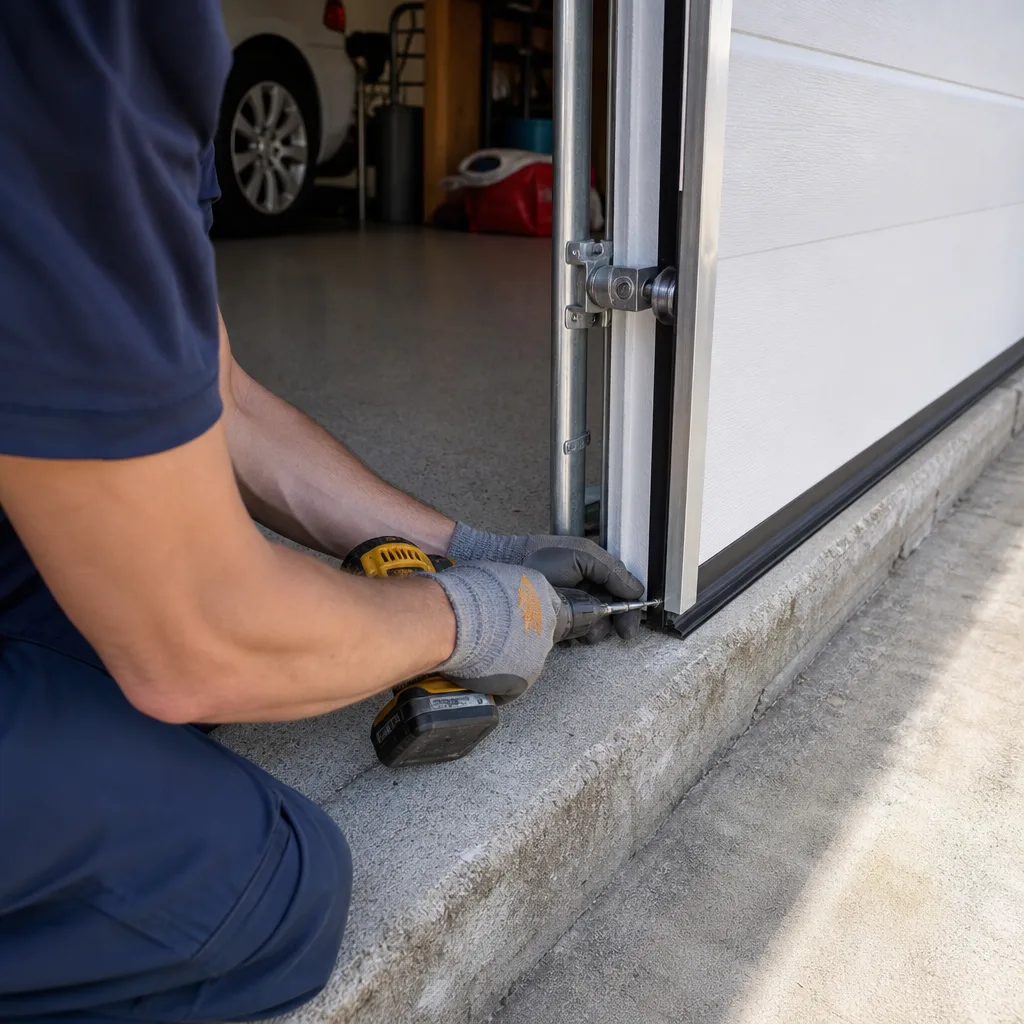
Asking “did you pull a permit?” gets you a yes or a no. Verifying it gets you the truth. In Forsyth County, permit records are public, and there are three ways to confirm a permit exists before any work begins on your Cumming home:
- Ask for the permit number, then verify it. A contractor who has pulled a permit can give you the number immediately. Call the Forsyth County permit office or check their online portal, and confirm the address and scope match your project. A contractor who hesitates to give the number hasn’t pulled it yet.
- Request the permit card be posted before work starts. Forsyth County requires the permit card to be displayed at the job site. If the card isn’t there on day one, the permit probably doesn’t exist. The card shows the permit number, the scope, and the inspection schedule.
- Put permit responsibility in the contract. The contract should state that the contractor is responsible for obtaining all required permits and scheduling all required inspections. If the contractor won’t put that in writing, that’s a decision you should weigh carefully.
The documentation-first approach is the only one that holds up. We write the permit number into the scope of work before we start any job that requires one, and the homeowner gets a copy of the approved permit application. No one should be taking a contractor’s word on something that’s a public record check away.
Common Mistakes to Avoid
- Assuming a “standard size” door means no permit. The permit question is about whether the rough opening changes, not whether the door is a stock size. A nine-foot opening that was once eight feet required a permit, even if the nine-foot door came from a standard catalog.
- Taking the contractor’s habit as the code. A contractor who has done a hundred same-size replacements without permits is right that those jobs didn’t need one. That experience says nothing about your enlarged opening. Verify against the county, not against the contractor’s memory.
- Painting over a fire-rated label. The label on the hinge edge of a fire door is what proves compliance. One coat of paint and the label is illegible, and the door no longer satisfies the inspector. If the door is being painted, the label gets taped off or documented with a photo first.
- Skipping the rough inspection to save time. Closing up a wall before the inspector sees the header means the inspector never sees the header. At final inspection, the county can require the wall to be reopened. The time saved is never worth the correction cost.
- Signing a seller’s disclosure that omits non-permitted work. The disclosure form asks directly. Answering “no” when the answer is “yes” converts an oversight into a misrepresentation. If you know work was done without a permit, disclose it and address it before listing.
- Waiting until a sale to fix a non-permitted header. The retrofit permit process costs more than the original permit, and it happens under deadline pressure from a closing date. If you know the header was modified without a permit, fix it on your schedule, not the buyer’s.
- Using a contractor who won’t put the permit in writing. A verbal promise about permits disappears the moment something goes wrong. The contract should assign permit and inspection responsibility in writing, with the permit number recorded once it’s issued.
When to Call a Professional
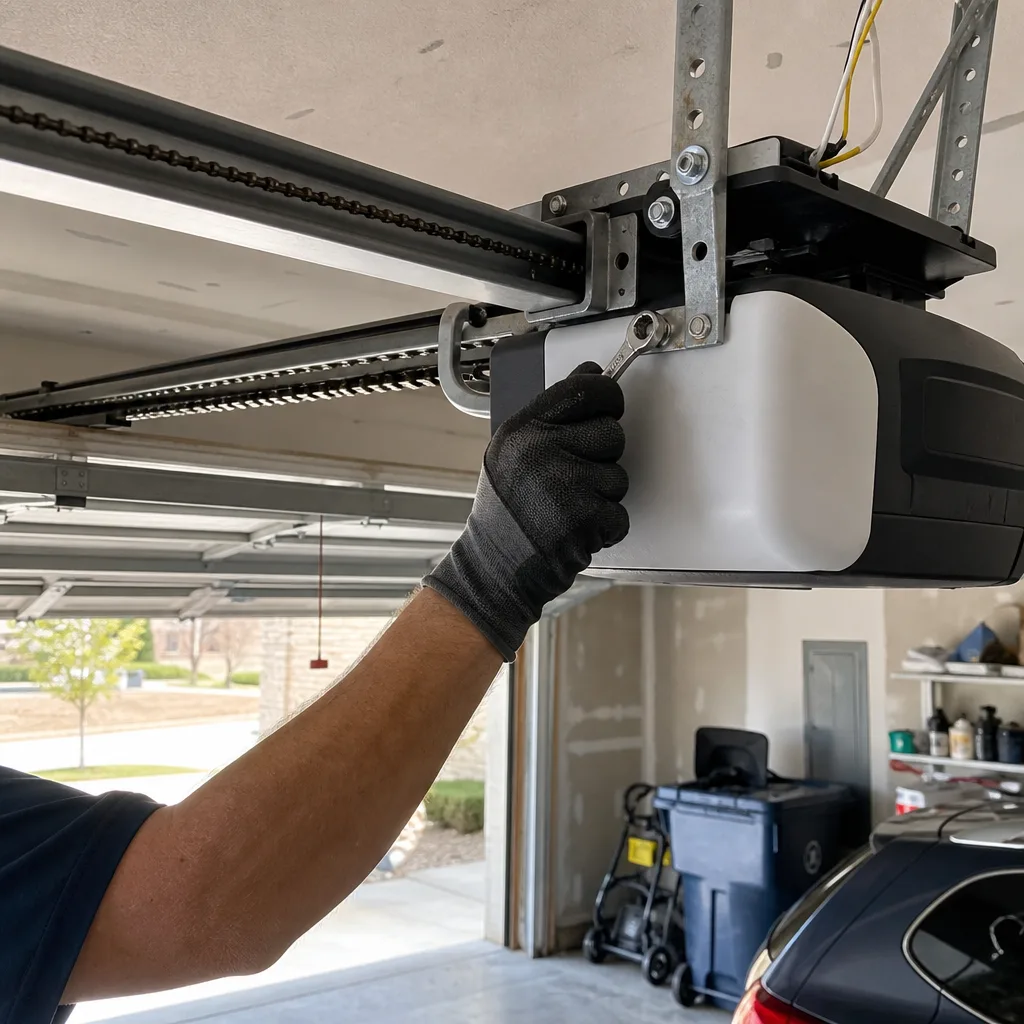
If your garage door project involves a new rough opening, an enlarged opening, a header modification, or a fire-rated door between garage and living space, call a contractor who works with Forsyth County’s permit process regularly. The permit is the cheap part; correcting an undersized header after the fact is not. If you already have a written estimate from another company and you’re not sure whether the scope requires a permit, Servo Garage Doors Cumming offers a free second opinion on any competing written estimate. Explore more guides & resources on our blog. Bring the paperwork, and we’ll tell you what the code requires and what it doesn’t. We also offer free estimates in Cumming, with a flat, written price and written scope delivered before any work starts, per Clause 1 of The Haven Standard. Call (470) 758-8863.
Frequently Asked Questions
No permit is required in Georgia for replacing a garage door with a door of the same size in the same rough opening. The replacement is considered a component swap, not a structural alteration under IRC R105.1. If the rough opening changes size or the header is modified, a permit is required. Call (470) 758-8863 for a free estimate on a replacement, and we’ll confirm the permit question for your specific opening.
Size alone doesn’t trigger the permit. The trigger is whether the rough opening is altered. If the opening is unchanged, no permit is needed regardless of door size. If the opening is enlarged from 8 feet to 9 feet wide, the header span changes and a permit is required. Call the Forsyth County Department of Planning and Community Development to confirm your specific scope.
No. Converting a garage bay to conditioned living space is an alteration of the building’s use and requires a permit in Cumming. The new wall between the garage and living space must meet the fire-separation requirements of IRC R302.5.1, including a self-closing, labeled door assembly. This is one of the most common scenarios for correction notices in Forsyth County.
The seller’s disclosure form requires you to state whether you’re aware of work performed without required permits. If non-permitted structural work is discovered during the buyer’s inspection, the buyer’s lender may require retroactive permitting before closing. The cost of opening the wall, correcting the header, and passing the inspection falls on the seller. The contractor who did the original work is not liable unless a contract provision assigns that responsibility.
A code-compliant fire-rated door carries a testing agency label, usually from UL, on the hinge edge of the door. The label states the fire rating in minutes. If the label is missing, painted over, or illegible, the door does not meet code as a fire-rated assembly, regardless of its thickness. The door must also be self-closing and self-latching. Call (470) 758-8863 if you need help verifying a fire-rated door in Cumming; estimates are free.
No. Garage door opener replacement is classified as maintenance, not structural work, and no permit is required anywhere in Georgia. The same applies to springs, cables, rollers, tracks, and panels. These are component-level repairs that don’t touch the rough opening, the header, or any fire-rated assembly.
The Bottom Line
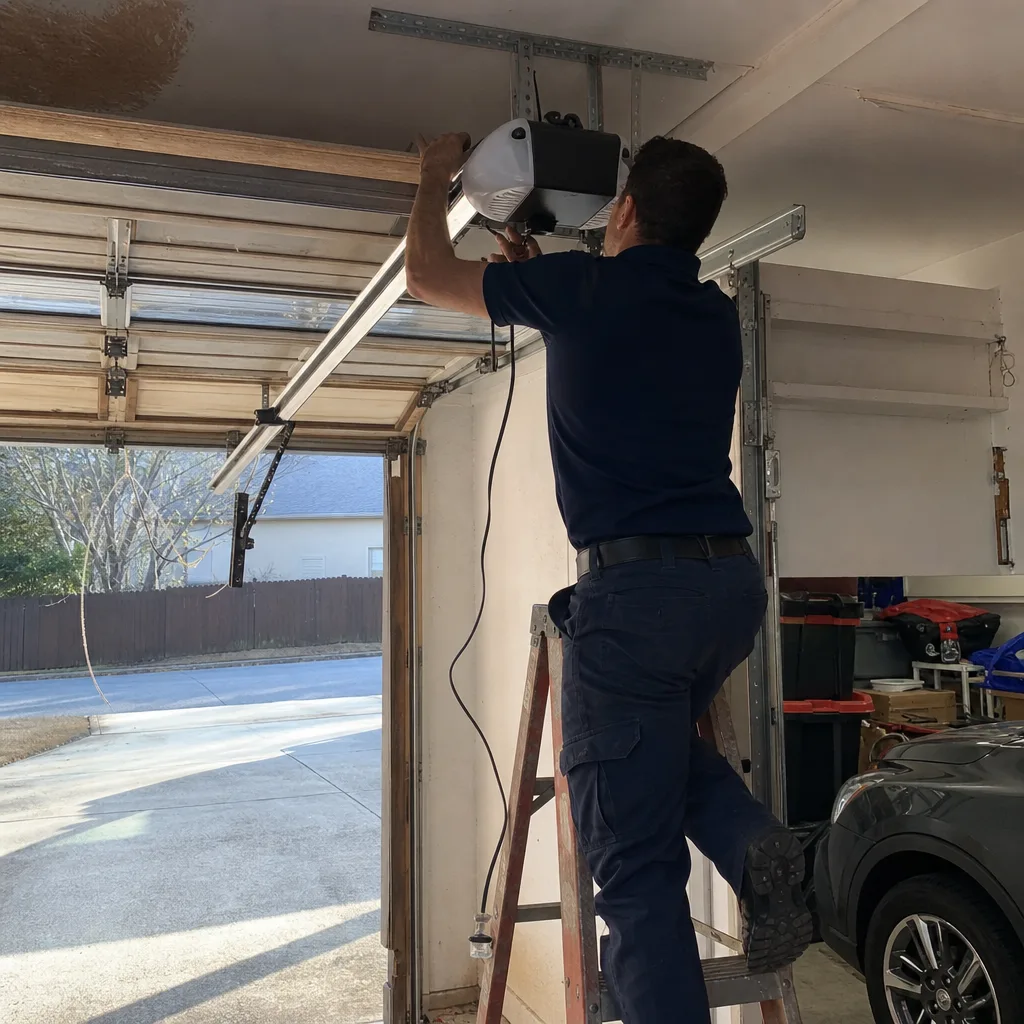
In Georgia, the permit question for garage doors comes down to one test: did the rough opening change? If it didn’t, you’re replacing a component in an existing structure, and no permit applies. If it did, you’re altering the structure, and the Forsyth County permit office wants paperwork before work starts. The IRC sections that govern this are R105.1 for permits, R602.7 and R603.7 for headers, and R302.5.1 for fire-separation doors. Confirm permits in writing before work begins, verify against the county, and never let a contractor’s habit substitute for the code. At resale, the signed disclosure makes non-permitted work the homeowner’s problem, and it’s cheaper to fix before listing than after a sale falls through.
Written by Marcus Deller, Owner at Servo Garage Doors Cumming, serving Cumming since 2015.