
Last updated September 20, 2026
Full 25-point door and opener safety check with every visit - springs, cables, rollers, tracks, and your LiftMaster or Chamberlain opener included
You get a price before we start. It does not change when the truck arrives.

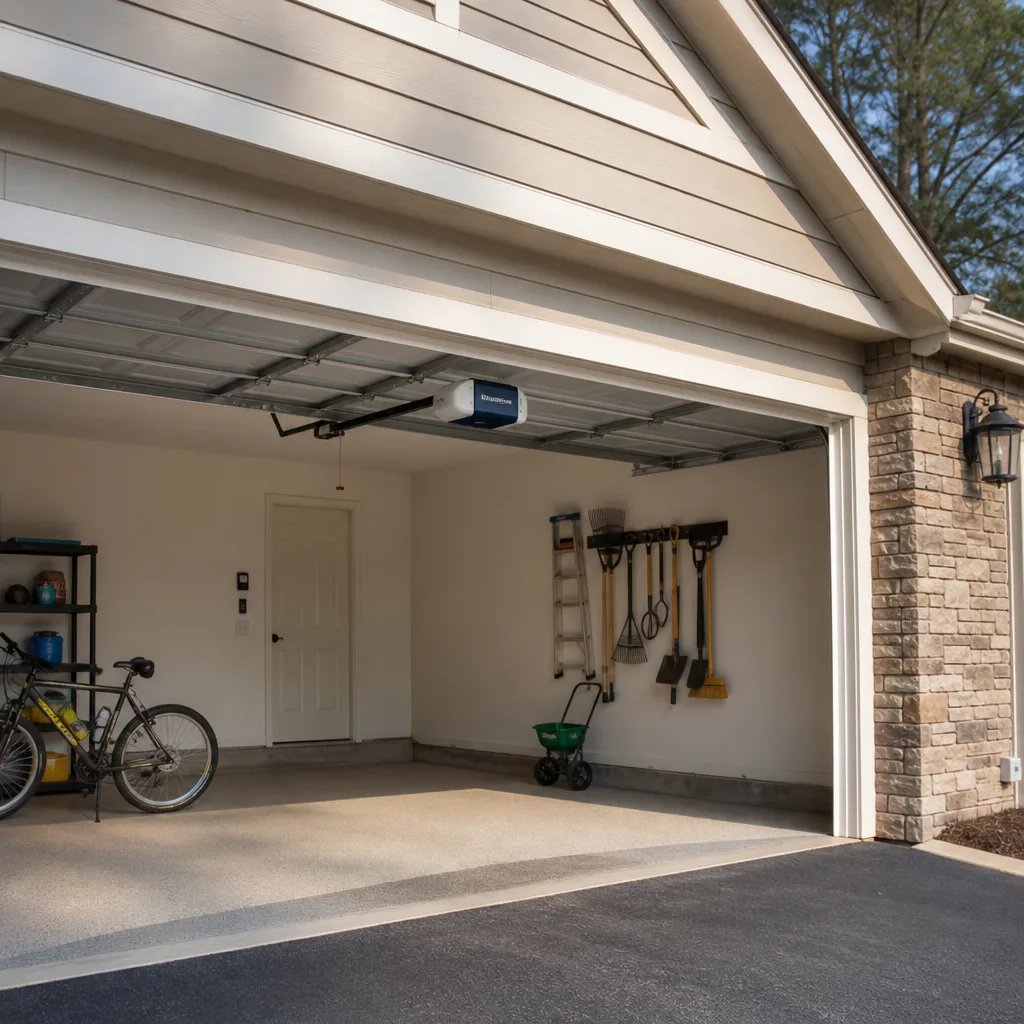
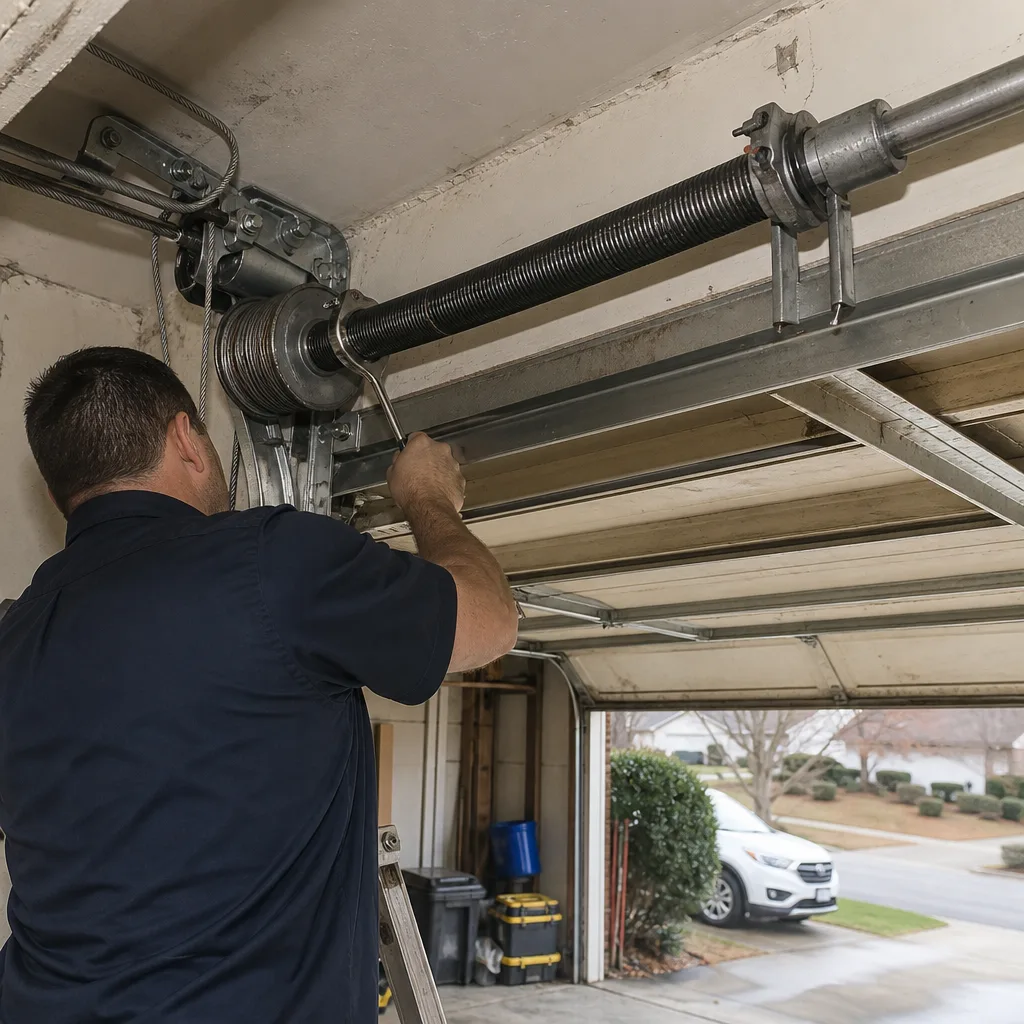 Before
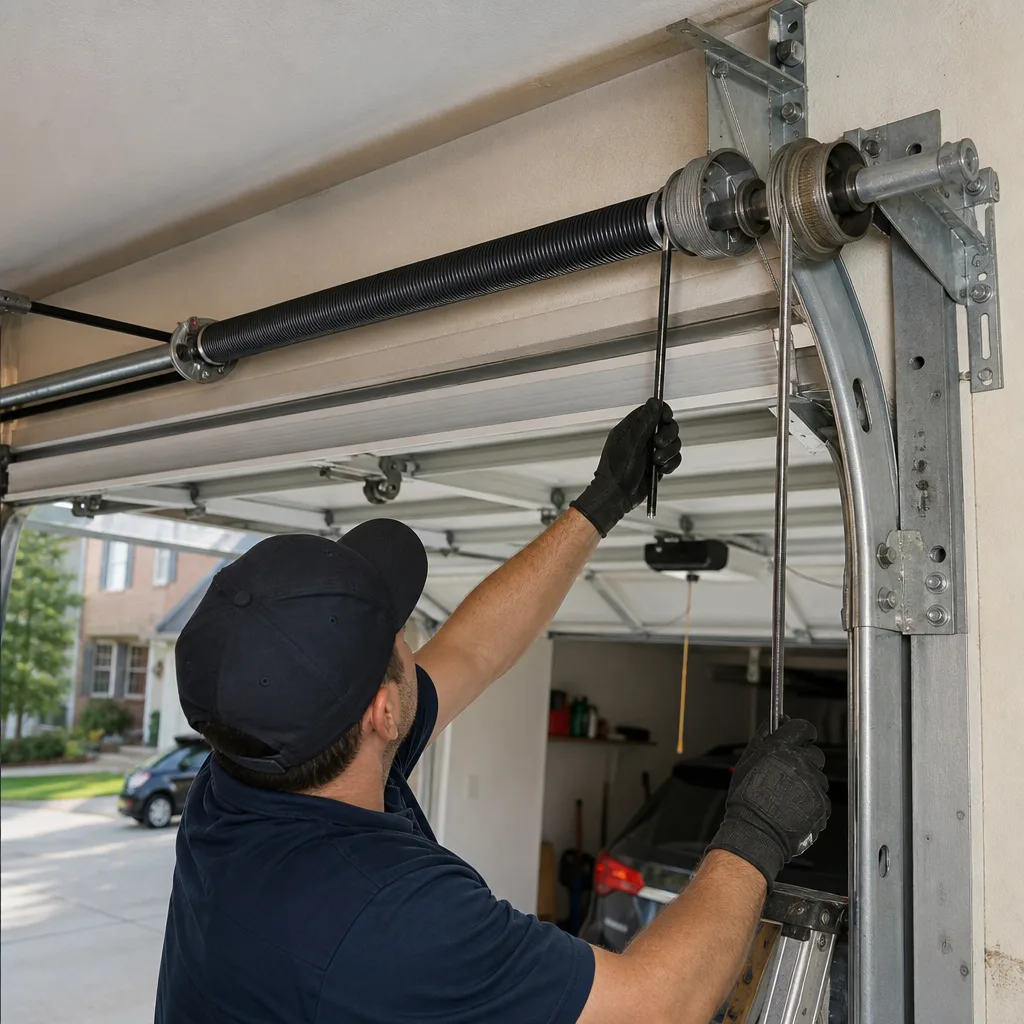 After
After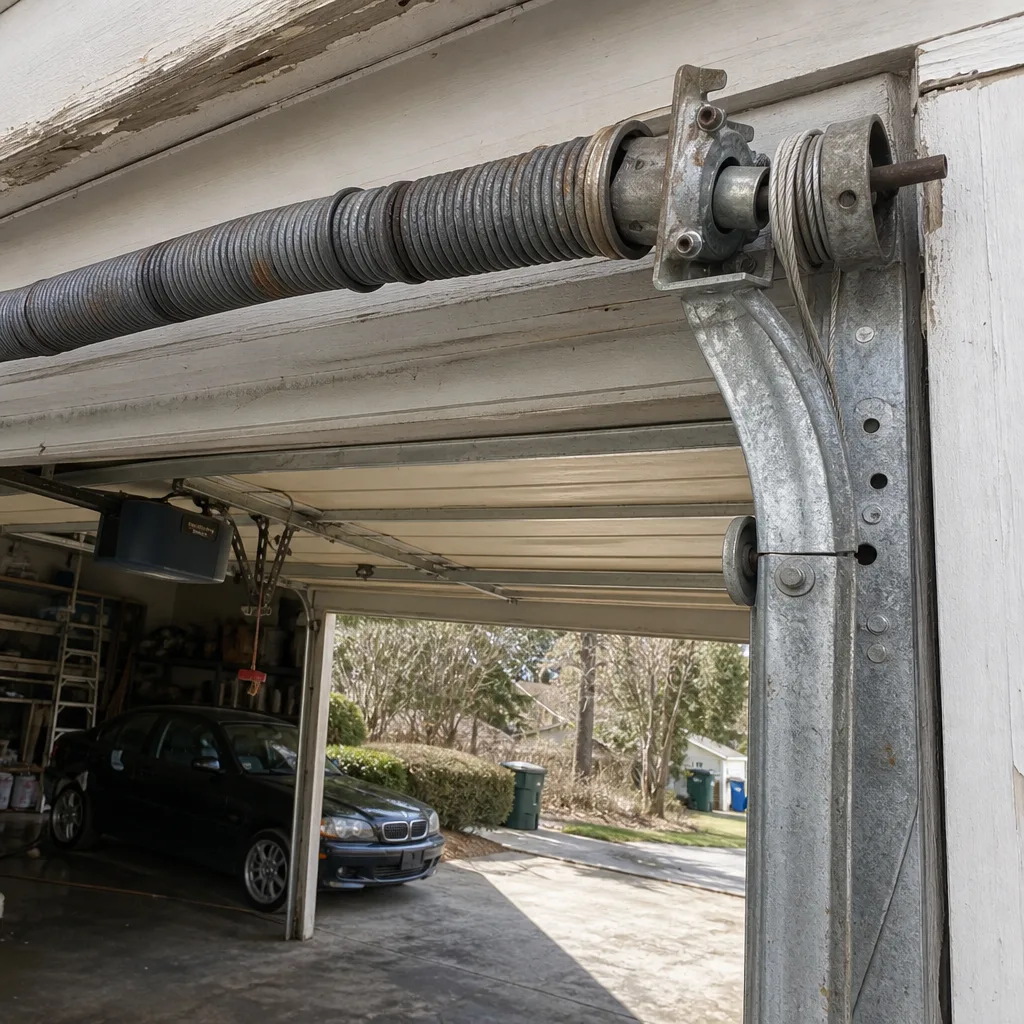 Before
 After
After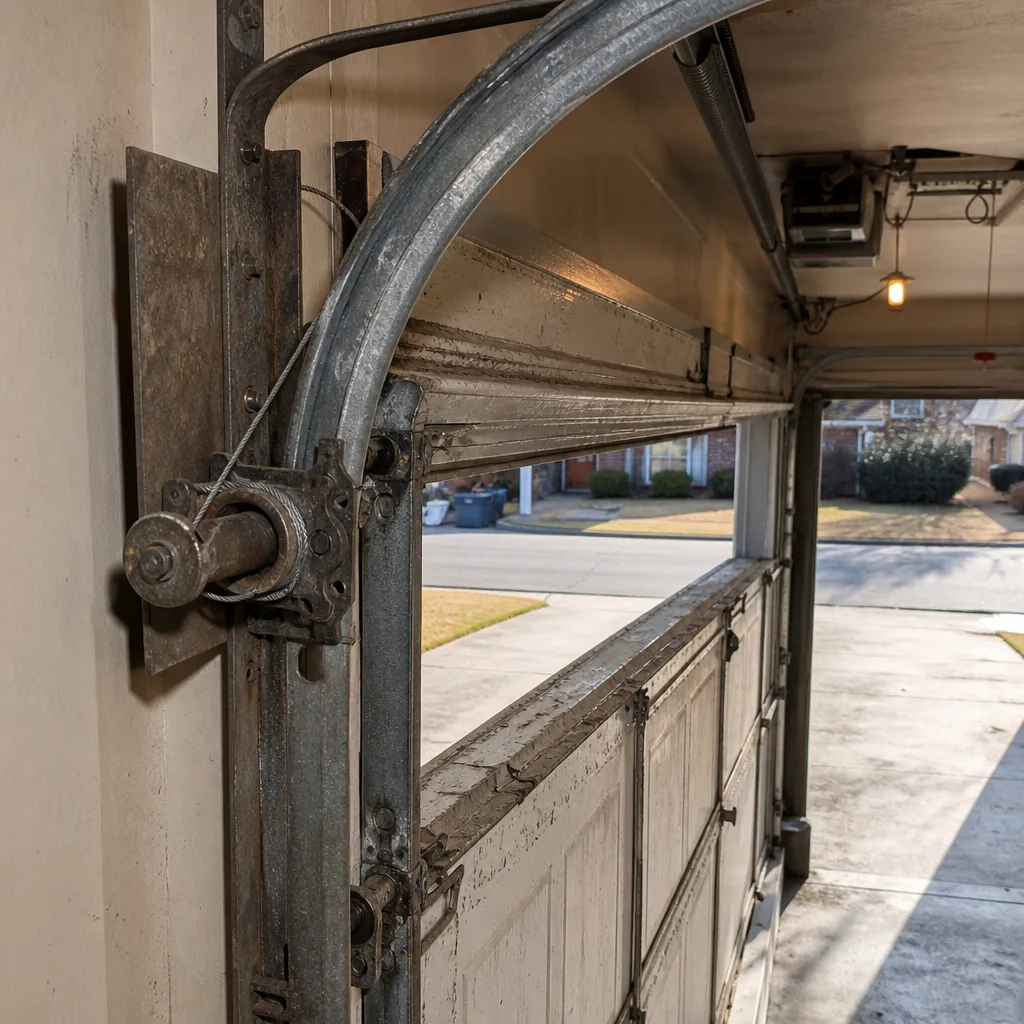 Before
 After
AfterGarage Door Repair Maintenance Checklist for Cumming Homeowners
WD-40 on garage door rollers is one of the most common homeowner mistakes we see in the trade. It strips the factory lubricant coating off nylon rollers and accelerates wear, yet it’s the first thing people reach for when the door starts sounding rough. This guide gives Cumming homeowners exact thresholds, correct product types, and the three maintenance items that get skipped until they turn into a our Garage Door Repair services call. If you live in Forsyth County, your garage door faces pollen, humidity, and temperature swings that most generic checklists never account for. Here’s what actually needs doing, and when.
Quick Answer
A garage door maintenance checklist for Cumming homeowners should include monthly visual checks of rollers and cables, semi-annual lubrication with silicone spray (never WD-40), an annual auto-reverse force test using a 2×4 laid flat per CPSC standards, and a professional tune-up every 18-24 months. The three items most Cumming homeowners skip are the force test, the torsion spring rust inspection, and the door balance check. Skipping these three is what turns a $14 bearing into a $340 spring replacement.
Table of Contents
- Monthly Visual Inspection: What to Look For
- The Lubrication Schedule: Exact Products by Component
- Semi-Annual Tasks: Balance, Force, and Hardware
- Annual Auto-Reverse Test: The Exact 2×4 Method
- Torsion Spring Inspection: Rust vs. Pitting vs. Failure Warning
- What a Professional Tune-Up Covers (and Documents)
- Cumming-Specific Factors: Pollen, Humidity, and Temperature Swings
- Common Mistakes to Avoid
- When to Call a Professional
- Frequently Asked Questions
 Before
 After
AfterMonthly Visual Inspection: What to Look For
We recommend a 10-minute walkaround once a month, and the good news is that Cumming’s weather makes this a year-round habit, not just a spring chore. The goal is to catch wear before it becomes a mechanical failure. Here’s what to check each month.
- Rollers: Look for cracks, flat spots, or chips on the roller wheels. Nylon rollers with visible crumbling mean the bearing inside is failing, and a failing bearing grinds the roller stem until it snaps. Rollers last 10-15 years in Cumming’s climate, but pollen grit shortens that if the tracks stay dirty.
- Cables: The lift cables on either side should look tight and straight, with no fraying or rust staining. A cable that looks fuzzy at any point is one strand away from breaking. Never touch a cable under tension: the energy stored in a torsion spring is what makes cable inspection a no-touch job beyond visual checks.
- Track alignment: Run your eyes down both vertical tracks. Any gap, bend, or visible warp means the door is fighting its own hardware. Cumming garages built on slab foundations settle over time, and a settled slab shifts the tracks by enough to cause drag.
- Weather seal: The rubber strip at the bottom of the door should sit flat and flex when pressed. A hardened or cracked seal lets humidity and pollen into the garage, and Forsyth County has plenty of both.
- Hinges and brackets: Look for loose bolts, rust streaks, or movement where hinges mount to the door sections. Loose hardware transfers vibration into the door panels and cracks them around the fastener holes.
Most of these checks take less time than finding your keys. Cumming residents with attached garages will benefit most from this routine, since a garage door that seals correctly also keeps conditioned air inside the house where it belongs.
The Lubrication Schedule: Exact Products by Component
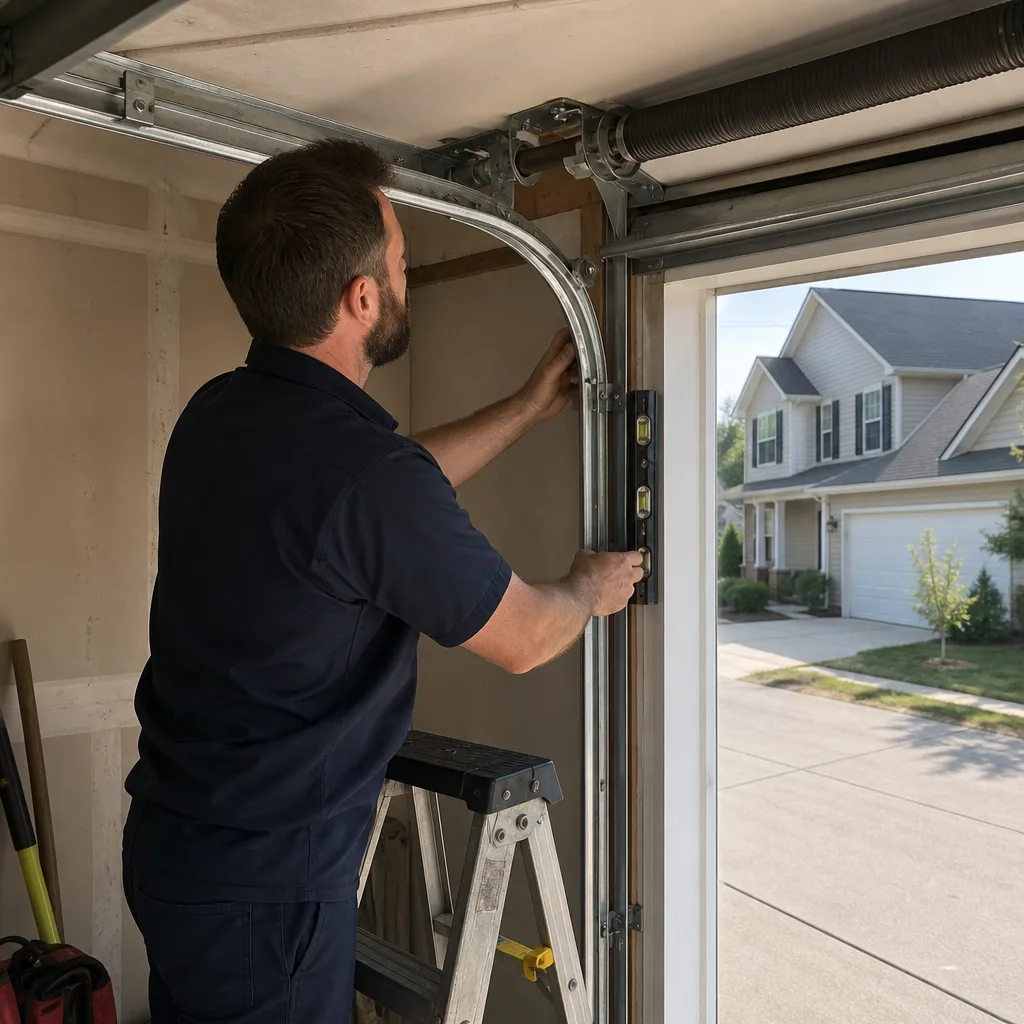
Here’s where most checklist guidance fails. “Lubricate moving parts” is vague enough to be useless, and vague advice is how nylon rollers end up sprayed with WD-40. The rule is simple: silicone spray for most pivot points, white lithium grease for the opener rail, and nothing on bearings that are permanently sealed. Here’s the exact breakdown.
What to lubricate every six months
- Rollers (nylon): Apply a thin coat of pure silicone spray to the roller stem where it enters the hinge. Do not spray the roller wheel itself. Nylon rollers ride on sealed bearings; lubricating the wheel face does nothing except collect pollen.
- Hinges: One short burst of silicone spray on each pivot point, then work the door up and down once to distribute it. Hinges are the most common source of a “groaning” garage door in Cumming homes, and it’s almost always a dry pivot.
- Torsion spring: A light coat of silicone spray along the entire length of the spring once or twice a year. This slows surface rust. It does not prevent metal fatigue, which is why the visual spring inspection matters separately.
- Latch and lock: If your door has a manual slide lock, a dry graphite or silicone spray keeps it from seizing. Humid Cumming summers will bind an unlubricated lock within two seasons.
What to lubricate annually
- Opener rail (chain or screw drive): White lithium grease, applied as a thin bead along the rail, once a year. Too much grease attracts dust and makes the trolley carriage work harder. Belt-drive rails from LiftMaster and Genie are self-lubricating; do not apply anything to them.
What you should never lubricate
- Nylon roller wheels: The face of the roller rides in the track; it does not need lubrication, and WD-40 actively degrades nylon.
- The track itself: Lubricating the track makes the roller slide instead of roll, which flattens the roller over time. Tracks should be cleaned, never greased.
- Frayed cables: If you see a frayed cable, do not lubricate it and do not touch it. Call a professional. A cable under torsion spring tension carries enough force to cause serious injury if it releases.
- The auto-reverse sensors: The photoelectric eyes near the floor should be wiped clean with a dry cloth. Spray lubricant leaves a film that diffuses the beam and triggers false stops.
We’ve serviced doors in Cumming where the previous owner applied WD-40 religiously for years. The rollers were visibly pitted, the tracks had a sticky film, and the door kicked halfway up because the sensors were gummed. The fix was not a repair, just a cleanup and correct products. That’s the difference between knowing the trade and repeating advice from a more guides & resources.
Semi-Annual Tasks: Balance, Force, and Hardware
Twice a year, after the monthly visual inspection, there are three hands-on checks that tell you more about your door’s health than any other single step. They take about 15 minutes combined.
- Door balance test: Pull the release handle to disconnect the opener, then manually lift the door to about waist height. A properly balanced door stays put without support. If it drifts down, the springs are losing tension or the door needs adjustment. If it shoots up, the springs are over-tensioned, which is just as hard on the opener. Either result means the spring system needs professional attention.
- Reversal force test (rough check): With the door open, press the wall button to close it, and hold your hand flat against the door as it descends. It should reverse on gentle pressure, not push through. This is a rough gauge; the annual 2×4 test is the actual standard.
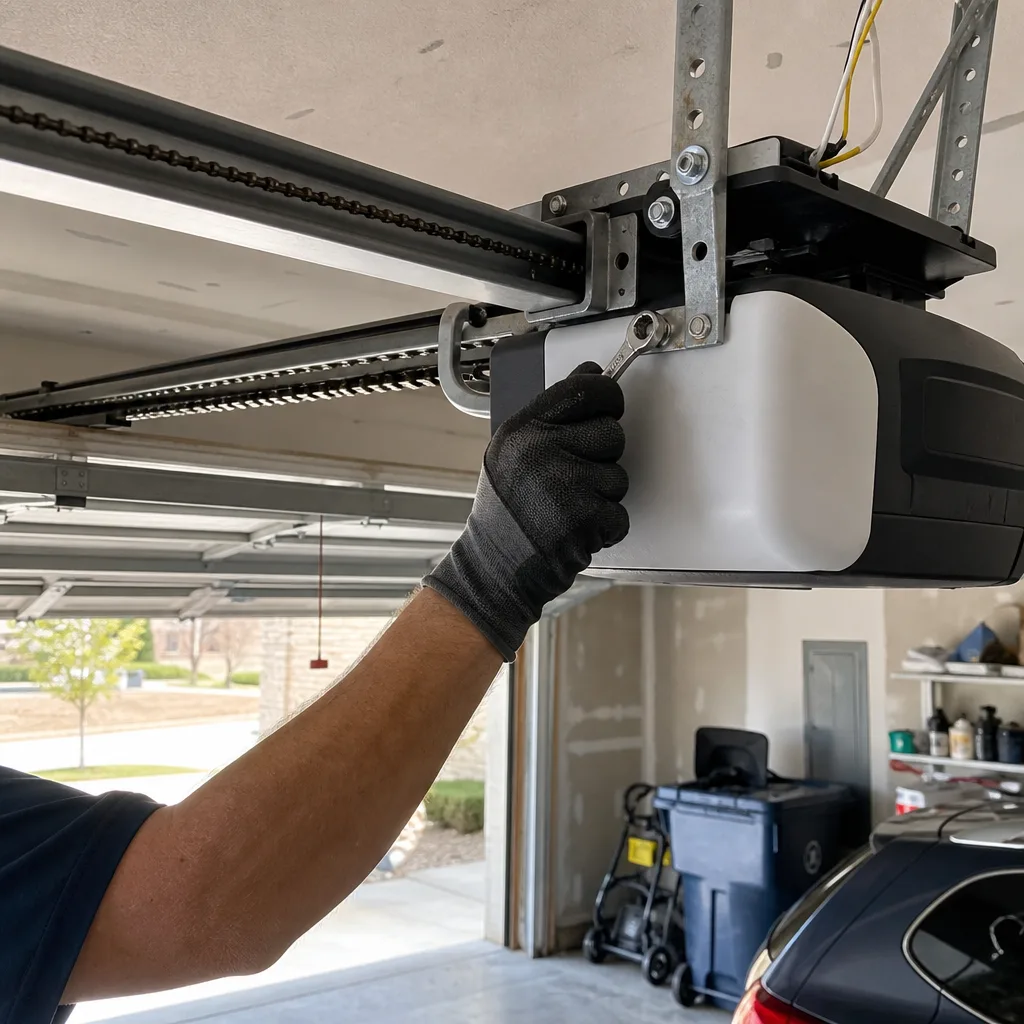
- Hardware tightening: With the door in the closed position, use a socket set to check the bolts on the hinges, track brackets, and opener brackets. The vibration of 1,000 open-and-close cycles a year will loosen them. Use a calibrated hand, not a breaker bar: overtightening strips the threads in the metal panels.
Cumming residents with wooden garage doors should pay extra attention to the balance check. Wood doors are heavier than steel, and when the springs lose tension on a heavy door, the opener’s motor becomes the de facto lifting system. That’s how a $300 opener repair becomes a $600 replacement.
Annual Auto-Reverse Test: The Exact 2×4 Method
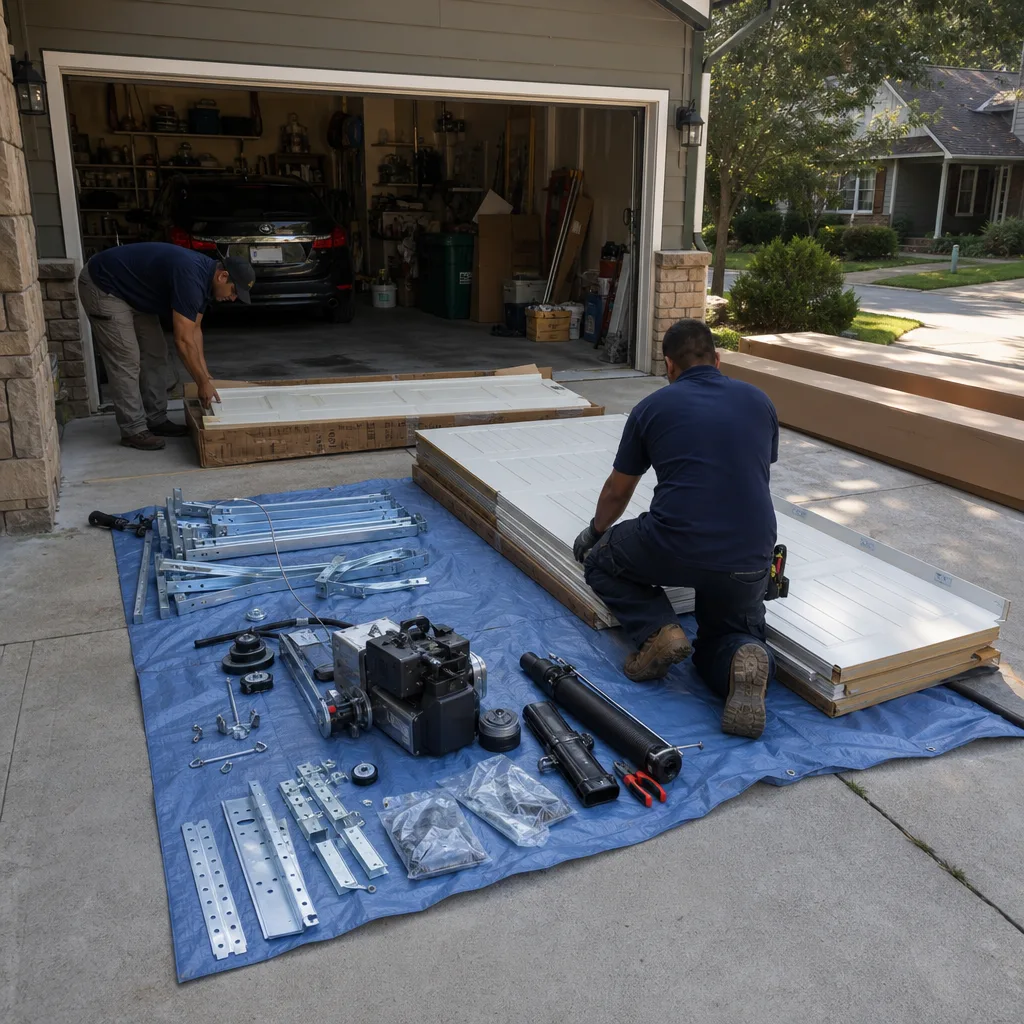
The auto-reverse mechanism is the safety device that stops the door from crushing whatever is under it. Since 1993, every garage door opener sold in the United States is required by CPSC standards to reverse within two seconds of contacting a 1.5-inch-tall object. Here’s the exact test, using a 2×4 board laid flat on the floor.
- Place a 2×4 flat under the center of the door. A 2×4 flat on concrete sits about 1.5 inches off the floor, which is precisely the CPSC threshold.
- Close the door using the wall button or remote. Do not stand in the doorway. Stand beside the track, within a step of the wall button.
- Watch the door contact the 2×4. It should stop within two seconds and reverse direction immediately. A passing door reverses without hesitation and returns to the open position.
- If the door does not reverse, presses down, or hesitates noticeably, the force setting is too high or the limit switch is out of adjustment. This is a safety failure, not a nuisance issue.
- Repeat the test on the other side of the door, then again with the door in reverse (opening against the 2×4). Both directions should respond the same way.
Most openers from Chamberlain and LiftMaster have force-adjustment dials on the motor unit, but adjusting them without understanding the limit switch relationship can create a door that reverses on nothing, or worse, one that only reverses when the motor strains hard enough to trip. We’ve seen operator-adjusted doors in Cumming that passed the 2×4 test but reversed erratically at the top of travel because the limit setting got nudged. That’s the kind of thing a technician finds in 20 minutes and a homeowner chases for a season.
If the door fails the 2×4 test, close it manually, disable the opener with the release handle, and call for service. This is not a “monitor it” situation. The auto-reverse is the difference between a garage door and a guillotine.
Torsion Spring Inspection: Rust vs. Pitting vs. Failure Warning
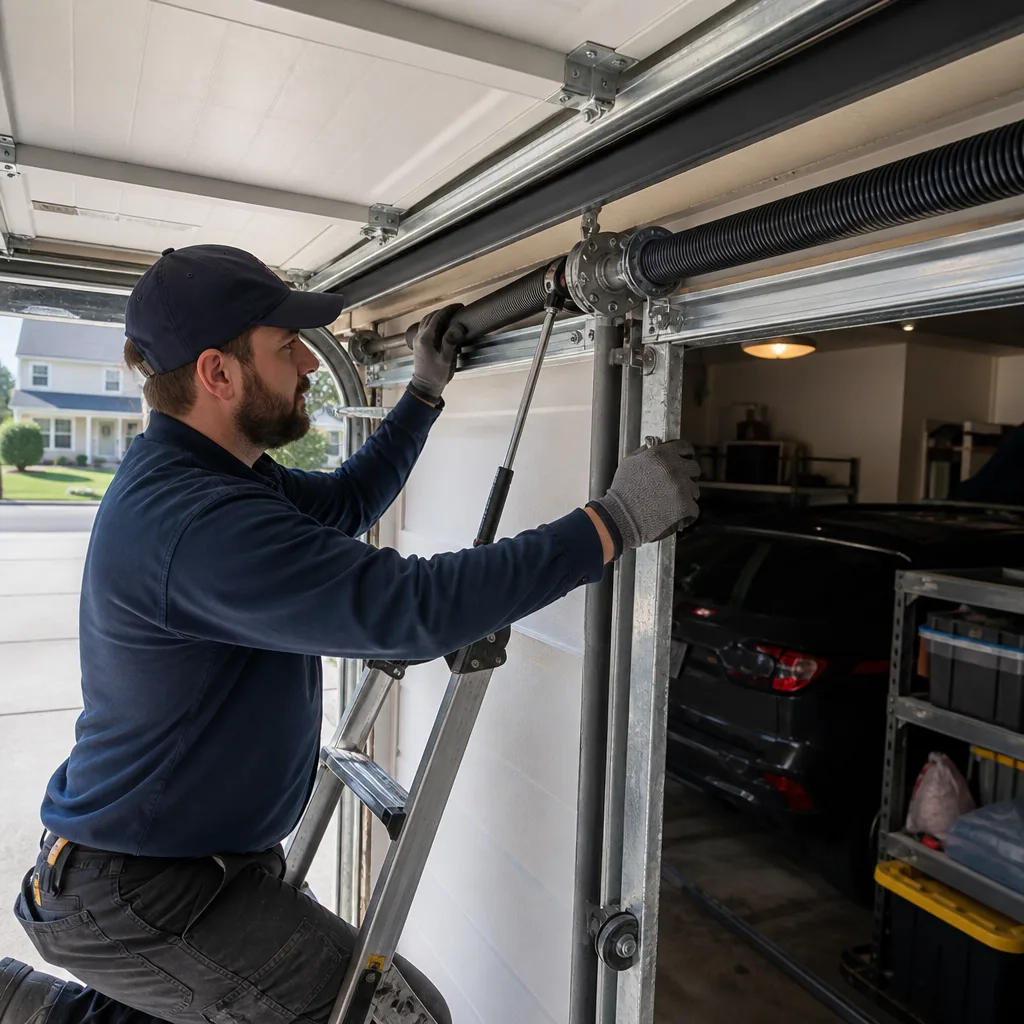
Torsion springs are the counterweight muscles of your garage door, and in Cumming’s humidity, surface rust is normal. What matters is the difference between cosmetic oxidation and structural pitting, and one specific Garage Door Warning Signs: A Cumming Homeowner’s Reference Guide that a spring is close to failure. We’ll cover both.
What normal oxidation looks like
A light, consistent reddish-brown film across the surface of the spring is surface oxidation. It happens to every exposed steel spring in the Southeast, and by itself, it’s not a cause for replacement. The spring still functions, and the rust layer is cosmetic. You can slow it with a light silicone spray, but you cannot stop it in a humid climate.
What structural pitting looks like
Pitting is different. Run your eyes along the spring coils and look for small craters, flakes, or areas where the metal looks eaten rather than coated. If you scrape a fingernail across a rust spot and it leaves a crater, that’s pitting. Pitted springs have lost cross-sectional area, which means they have lost load-bearing capacity. They will still lift the door until the day they don’t, and that day comes at random.
The gap-in-coil warning sign
This is the one Cumming homeowners consistently miss. A torsion spring under no load should show tight, even coils with no daylight between them. If you see a visible gap between any two coils, walk away and call a professional. That gap means the spring has already yielded internally, the metal has elongated, and the remaining life is measured in cycles, not months. The door may still open and close, but the spring is not going to warn you again.
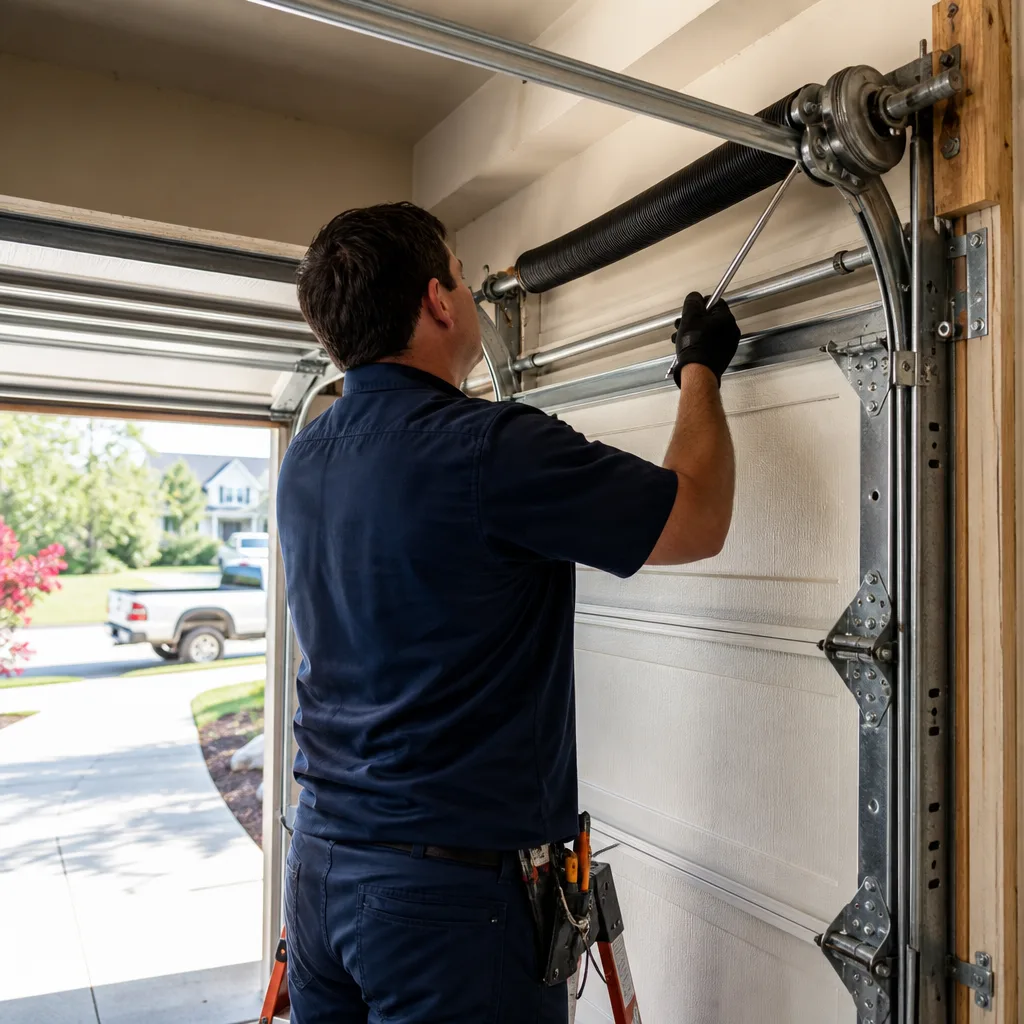
Spring failures typically happen with the door in the open position, because that’s when the spring carries maximum tension. The result is a sudden, violent release of energy. It’s the reason we photograph springs before we quote replacement and the reason DIY spring work is not something we will walk you through. The energy stored in a wound torsion spring is enough to snap a wrench and send it into a wall, or into a person. Clause 4 of The Haven Standard, which we operate under, requires our technicians to photograph the failed component before quoting a replacement. It’s not theater. It’s so you can see the pitting, the gap, or the clean break with your own eyes.
What a Professional Tune-Up Covers (and Documents)
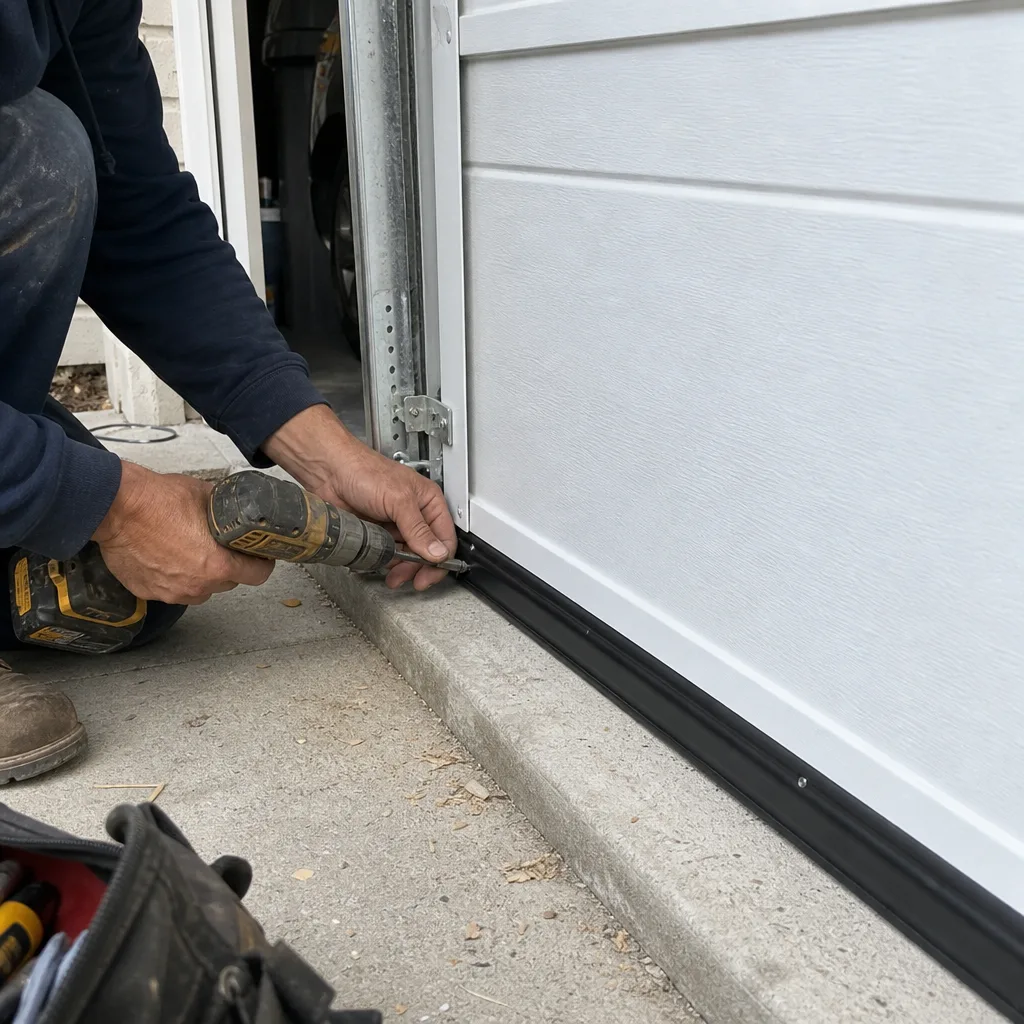
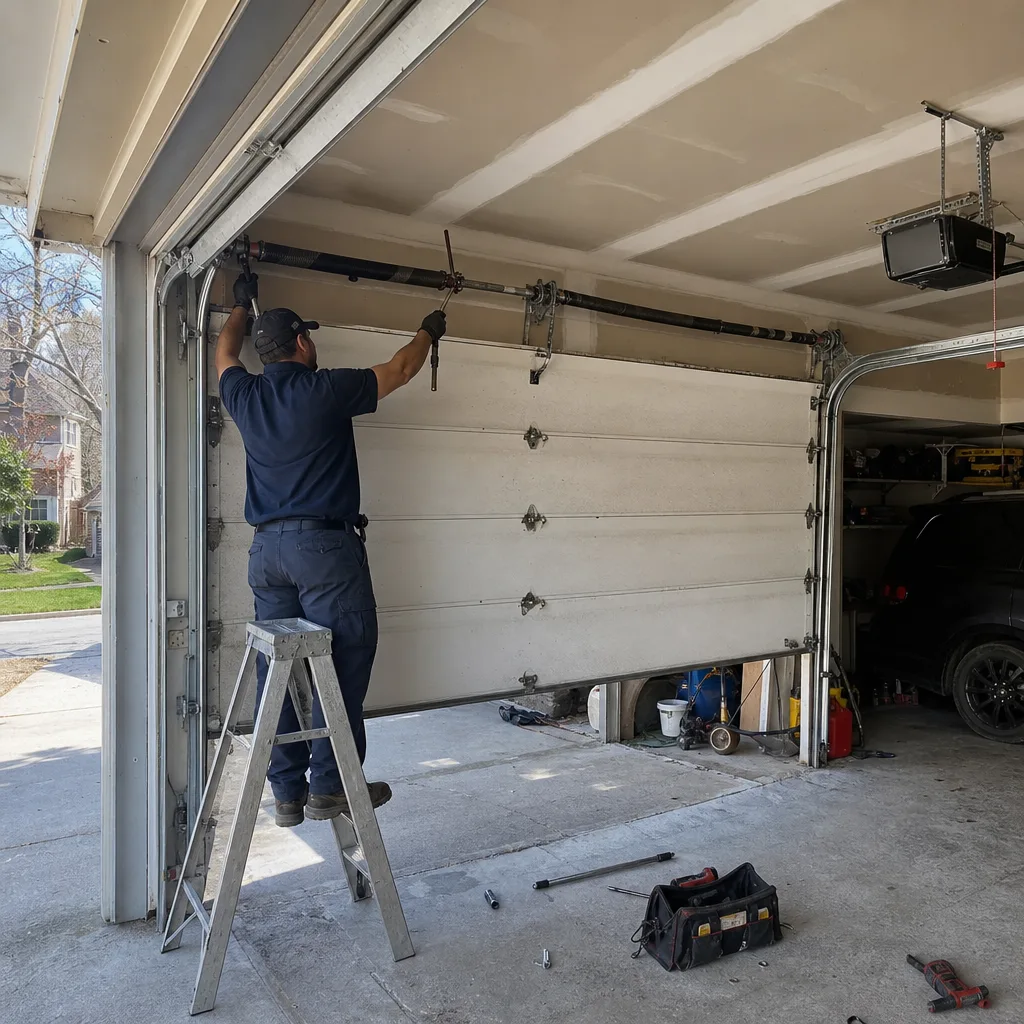
A homeowner can do a lot with this checklist, but there are four things a professional tune-up provides that no amount of DIY inspection can replicate: measurement, torque, documentation, and pattern recognition. Here’s what a professional service call from Garage Door Repair in Cumming actually includes.
Things a technician measures that you can’t
- Spring torque and cycle rating: A technician measures the spring wire diameter with calipers and the spring length to determine its current cycle rating. Most residential springs are rated for 10,000 cycles, which translates to 7-10 years of normal use. Without measurement, you can’t know if a spring is 40% through its life or 90% through it.
- Door panel thickness and gauge: Steel door panels are either 24-gauge, 25-gauge, or 26-gauge. Lighter-gauge panels flex, dent, and transfer more vibration to the hinges. A technician identifies what you have and can tell you whether the door is worth repairing or should be replaced.
- Opener force settings: Using a force gauge, a technician sets the opener to the minimum force required to move the door reliably. Most homeowners leave the force setting where the installer left it, and most installers leave it cranked high enough to hide a door that’s already struggling.
- Track and frame alignment: A technician checks track parallelism side-to-side with a level, and checks the door sections for square against the frame. A door that’s out of square by a quarter inch will wear rollers, hinges, and cable drums unevenly. You can’t see a quarter inch by eye.
What a professional documents that you should keep
Every professional tune-up should end with a written record. Here’s what that record looks like from our shop, and why it holds value at resale. The technician photographs each component before and after service. The invoice lists each part inspected, the condition, and the action taken. The written scope, per Clause 1 of The Haven Standard, states exactly what was included in the flat price. If a part is marginal, it’s listed with a recommendation and a dollar range for future replacement. When you sell your Cumming home, that paper trail shows a maintained mechanical system, which is a line item a home inspector can verify. Homeowners who can produce the record get a different conversation from buyers than homeowners who say “we never had a problem.” We’ve seen the difference it makes. Marcus Deller has kept documentation on every door we’ve touched since 2015, and that archive is the reason our Servo Garage Doors Cumming home page shows what our jobs leave behind, not just what they cost.
Cumming-Specific Factors: Pollen, Humidity, and Temperature Swings
Cumming sits at the edge of the northern Atlanta suburbs, and the climate here is harder on garage door hardware than the national average in three specific ways. Here’s what each one does to your door, and what to adjust in your routine.
Yellow pine pollen
Forsyth County’s spring pollen load is intense. Pine pollen is especially abrasive because the grains are larger and harder than most other species. When it settles on garage door tracks, it mixes with the existing lubricant into a grinding paste. If your door sounds sandy in April, that’s what you’re hearing. The fix is a dry wipe of the interior track surface each spring, before you lubricate anything. Wipe first, lubricate second. Lubricating over pollen just embeds the grit.
Summer humidity
Relative humidity above 70% for weeks at a time accelerates surface rust on any exposed steel component. That includes torsion springs, hinge pins, and the opener rail on chain-drive models. The practical effect is that the semi-annual lubrication schedule described above is not optional in Cumming. Skip one cycle, and the door will tell you it’s dry by getting louder. Skip two, and the wear is measurable.
Winter temperature swings
Cumming sees winter mornings in the 20s and afternoons in the 50s. That daily cycle makes metal expand and contract, which is why hardware loosens faster here than in a coastal climate with a narrow temperature band. Doors that live in unconditioned detached garages are the most affected. The semi-annual hardware tightening step catches most of what this causes, but the first cold snap each year is also the most common time for a marginal spring to finally give way. Cold metal is more brittle, and a spring that was pitted in October can fail in January.
The result of these three factors is that a garage door in Cumming needs its maintenance done on schedule, not when it starts acting up. By the time a door makes unusual noise, lubricant has been missing for weeks and wear has already started.
Common Mistakes to Avoid
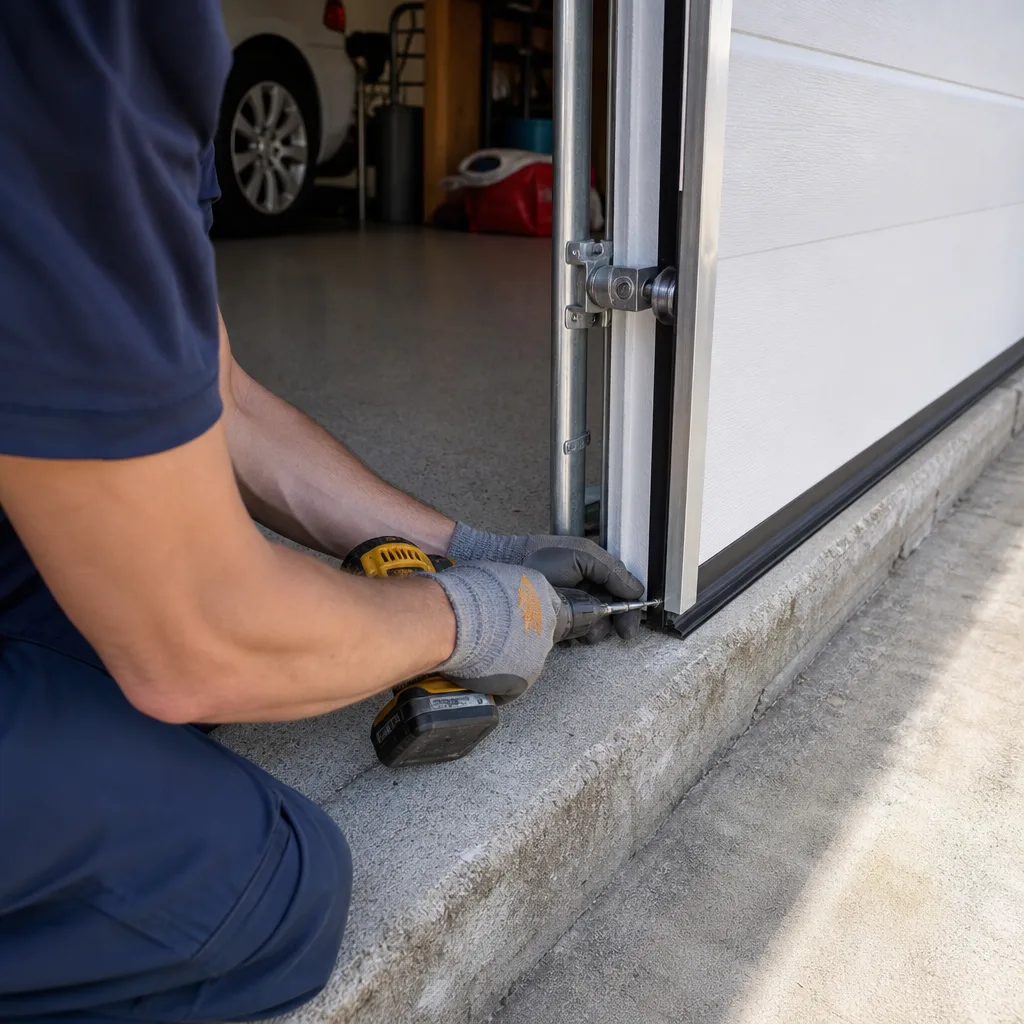
- Using WD-40 on rollers and hinges. WD-40 is a solvent, not a lubricant. It strips the existing lubricant and then evaporates, leaving the component drier than before. Nylon rollers will show visible pitting within two seasons of regular WD-40 use.
- Lubricating the track. The track is a guide rail, not a bearing surface. Greasing it causes the roller to slide instead of roll, which flat-spots the roller wheel and makes the door louder within weeks.
- Skipping the auto-reverse test because “it’s always worked.” Auto-reverse systems fail silently because out-of-adjustment force settings are invisible until something is in the way. The 2×4 test takes five minutes and is the only way to know if the safety system is functional.
- Ignoring a door that drifts down when manually released. A drifting door means the springs are losing tension, which means the opener motor is doing the work the springs should be doing. That shortens opener life and increases wear on every moving component.
- Painting over a rusted torsion spring. Painting a spring seals in moisture and hides pitting. It makes the spring look better while doing nothing for its structural integrity, and it complicates replacement later. A light silicone spray is the only coating a spring should get.
- Adjusting opener force settings without measuring. Crank the force dial up to stop false reverses, and the door will eventually fail the 2×4 test. Force and limit settings work together, and adjusting both correctly requires measurements most homeowners don’t have the gauges for.
- Replacing one spring instead of both. Torsion springs are rated for the same cycle life, so when one fails, the other is statistically at the end of its life too. Replacing one spring creates an unbalanced door and usually results in a second service call within a year. A professional will always recommend both, and will show you the measured cycle rating on the failed spring to prove it.
When to Call a Professional
There are four conditions that should never be treated as DIY projects. A broken torsion spring anywhere in the system, including the gap-in-coil condition described above, requires a professional, full stop. The stored energy in a wound spring is genuinely dangerous, and no amount of YouTube instruction substitutes for the right winding bars and the calibration that goes with them. A frayed or snapped lift cable is the same category, because cables share that spring energy and will take a finger or an eye if a homeowner attempts to save the $200 charge. A door that fails the annual auto-reverse test needs a force and limit recalibration, which requires gauges most homeowners don’t own. And any door that comes off its track, even partially, is a job for a technician, because forcing it back on bends the track, the panels, or both. Servo Garage Doors Cumming offers free estimates in Cumming, and every quote is written, flat, and agreed before work begins. Call (470) 758-8863.
Frequently Asked Questions
Most professional garage door tune-ups in Cumming run $89-$180, depending on the size of the door and whether opener service is included. A full tune-up with spring measurement, hardware inspection, lubrication, and a written record typically falls in that range. Servo Garage Doors Cumming provides a flat written price before any work begins, per Clause 1 of The Haven Standard, so the quote you agree to is the price you pay. Call (470) 758-8863 for an exact quote, no site visit required to get the number.
Every 18-24 months for a professional tune-up, with semi-annual homeowner lubrication and annual auto-reverse testing in between, per How to Hire a Garage Door Contractor in Cumming: A Step-by-Step Guide. Cumming’s pollen and humidity load justifies the shorter end of the range, especially for detached garages without climate control. If your door is over 10 years old, an annual professional check is a reasonable cadence.
Yes, and you should, but only with the right products. Pure silicone spray for hinges, roller stems, and the torsion spring. White lithium grease for chain-drive opener rails. Nothing on the track, nothing on nylon roller wheels, and nothing on the photoelectric sensors. The half-hour semi-annual lubrication routine in this guide covers everything a homeowner should touch.
Spring failure due to cycle fatigue, with noise complaints from dry hinges running a close second. Cumming’s humidity accelerates surface rust on springs, but the root cause is usually the spring hitting its rated cycle count. Most builder-installed springs are 10,000-cycle units, which is 7-10 years of normal use. If your house was built in 2015 and the springs are original, they are at the end of their rated life.
It helps with resale confidence, which is what buyers actually pay for. A documented service record shows the mechanical system was maintained, which preempts the buyer’s “what else haven’t they kept up” concern. We provide a written record with every service, including photo documentation of findings. Homeowners who can show that paper trail avoid the renegotiation that follows a failed home inspection.
Look for structural pitting (craters in the metal, not just surface rust) and especially for any visible gap between coils on a torsion spring. A gap means the spring has already yielded internally. Loud “bang” sounds when the door operates are another warning sign, though a spring often fails with no warning at all. If you see pitting or a gap, call (470) 758-8863 before the spring makes the decision for you.
The Bottom Line
A garage door in Cumming is a mechanical system that cycles 1,000 times a year through pollen, humidity, and temperature swings. The maintenance that keeps it running is specific, not generic: silicone spray on the right surfaces, lithium grease on the opener rail, a 2×4 auto-reverse test once a year, and an honest visual inspection of the torsion springs for pitting and coil gaps. Most failures we respond to in Cumming are not sudden, they are ignored. Garage Door Installation in Cumming and Garage Door Opener Repair & Installation in Cumming share the same root cause: a door that was never maintained and repairs that were deferred too long. The checklist in this guide is the same one our technicians follow when they arrive, and it’s yours to use without a service call. When the day comes that you want measurements, documentation, or a second set of eyes, Servo Garage Doors Cumming will quote a flat written price before any work starts, and you’ll have the photo record to prove what was found.
Written by Marcus Deller, Owner at Servo Garage Doors Cumming, serving Cumming since 2015.